The spiny water flea, one of Canada’s most damaging invasive species, has been in Ontario much longer than previously believed, according to new study by researchers at Trent and Queen’s universities.
A new method was used to estimate the living remains from insect fossils preserved in lakebed mud, while researchers also searched for molecules of DNA that the spiny water flea left behind in the lake bottom.
Researchers found evidence that the tiny crustacean was present in Ontario lakes decades, and in some cases more than a century, before its widely accepted discovery via traditional net surveys in Lake Ontario in 1982.
The study, led by Trent’s Dr. Andrew Tanentzap and co-authored by Queen’s Dr. John Smol and other researchers from Laurentian University and University of England, was published Sept. 24 in the Proceedings of the National Academy of Sciences. Its findings were shared in releases by Trent on Sept. 24 and Queens on Sept. 28.
“For decades, scientists believed the spiny water flea arrived through ballast water released by trans-Atlantic ships entering the Great Lakes,” Tanentzap stated. “That timeline shaped how government and conservation organizations have managed the species' spread across North America, which has come at considerable cost and caused significant economic and environmental damage to Ontario’s freshwaters.”
‘Sleeper population’ may have surged
The study results suggest the flea may have existed as a “sleeper population,” remaining rare and largely undetected until changing environmental conditions allowed its numbers to surge. That pattern helps explain why conventional monitoring — which relies on capturing organisms in nets or spotting them in the water — can miss low-abundance invaders that are small and nearly transparent.
“Lake sediment profiles can act like ‘time machines’, slowly accumulating libraries of information that we can then use to undertake retrospective environmental assessments,” Smol stated. “Such historical perspectives can often provide key information for effective lake management.”
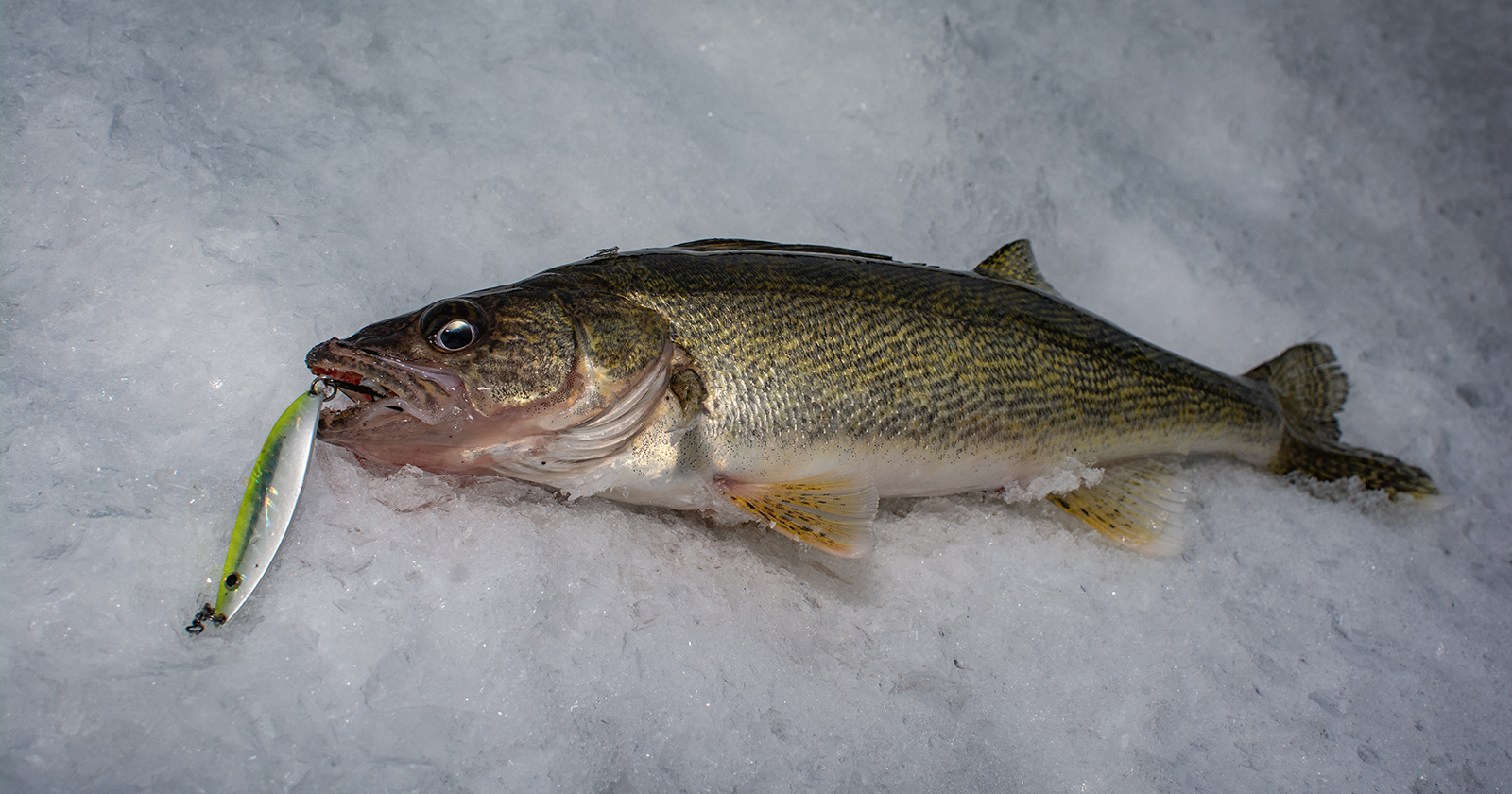
The spiny water flea preys on native zooplankton, tiny animals that control algae and feed young fish. It can seriously disrupt entire aquatic food webs, from lower trophic levels such as zooplankton to valuable sportfish like whitefish, walleye, and other native fish, OFAH Foundation Fisheries Biologist Adam Weir said.
Past work cited by the researchers shows spiny water flea invasions can cut zooplankton biomass by up to 34% and reduce species diversity by as much as 54%, with consequences for water quality and fisheries.
“Regardless of when they arrived, human-mediated dispersal continues to perpetuate the spread of this invader, with its distribution linked to recreational boating, fishing equipment and gear, lake accessibility, human activity, and even cottage density,” he said.
Study highlights importance of research
Studies like this demonstrate why continued research is so important to invasive species management, OFAH Foundation Invading Species Awareness Program Advisor Brook Schryer stated.
“Our understanding of an invasion is never necessarily complete and new evidence can challenge assumptions we have held for decades and ultimately help us make better decisions about where, when, and how we monitor for invasive species,” he said.
Environmental DNA has changed the way we look for aquatic invaders — we are increasingly able to search for the biological fingerprints organisms leave behind rather than relying exclusively on physically capturing them, Schryer said. “This is of particular importance when it comes to early detection and rapid response for high-priority invasive species.”
The research is also a good reminder that there is rarely a single perfect surveillance method, he said. Traditional sampling and citizen science remain extremely valuable but pairing it with tools such as eDNA can increase our ability to detect species when populations are yet to be established.
“The future of invasive species surveillance will increasingly involve combining a multi-method surveillance approach to give us the best possible chance of finding new populations as early as possible,” Schryer said.
Despite the research demonstrating that spiny water flea has been here longer, it remains essential that members of the public Clean, Drain, Dry their watercrafts and equipment between waterbodies, he added.
“There are many lakes that have not been invaded by spiny water fleas and it is essential that we prevent their spread to new locations.”
If you suspect you've encountered spiny water fleas, or any invasive species, call the toll-free Invading Species Hotline at: 1-800-563-7711 or report online at: www.EDDMapS.org
[Photo Credit: Andrew Barcham, OPP]
Click here for more outdoors news
Watch on-demand videos anytime on OFAH Stream