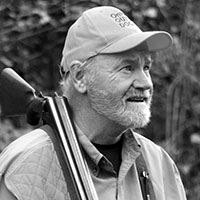
For years, I’d been meaning to venture to Hullett Provincial Wildlife Area, yet somehow a day of hunting there always escaped me. That changed last fall when I made a point of visiting during what I figured would be peak migration. Mallards were the target, and when the sun crested the horizon, it was their plaintive quacks and calls that greeted us.
Hullett is within easy reach of most southern hunters, located along the Lake Huron shoreline, near Goderich. Home for me is about two hours away and I headed out in the wee hours of the Hullet Marsh offers accessible waterfowl opportunity morning. I packed a modest spread of decoys and a couple of spinning-wing decoys — two calf sleds full. Hullett does not allow motorized vehicles.
Hunting stakes at Hullett are governed by a parking-lot system. Each parking space corresponds to a stake that is available to anyone. It would be unheard of for all 52 spaces to be occupied, so hunters can arrive with a reasonable expectation of finding a spot. Best of all, hunting there is free.
I had the privilege of hunting with Ben Elliott, a wildlife technician at Hullett, who had done a little bird-dogging to identify a productive blind. I followed Elliott down a well-maintained trail to a canoe he had left for us, then we paddled to a our blind on a small island.
We set the decoys and were ready when legal shooting light arrived. As the sun rose, more and more mallards decided it was time to stretch their wings. The first bird circled out in front of us. I I let out a few soft calls, and with one big swing, he turned and committed to the spread. I dropped him with a single shot at about 20 yards. The next few mallards followed a similar script, and Elliott and I dumped a pair of greenheads shortly after.
By the end of the hunt, we had half of a two-man limit, but every bird was a mallard, and every one decoyed beautifully.
Where ducks act like ducks
I hunt all across the country, often in highly pressured areas. I also venture to the American Deep South enough to remind myself what truly pressured birds look like. While I always enjoy hunting new places, I especially enjoy hunting places where ducks act like ducks. What I mean by that is there are places where even a couple of notes on a duck call send birds racing for the heavens. In other places, it can take eight, nine, or even 15 passes before a duck “sort of ” commits. And if you’re hunting an area like that, there’s a good chance a nearby gunshot will flare them for good on the sixth or seventh pass.
At Hullett, our ducks did it right. They decoyed like it was their job. For someone like me, who places more emphasis on fooling a bird than simply felling it, that made hunting an absolute joy.
The property
The Hullett property encompasses roughly 5,400 acres, of which 1,100 acres are marsh. Interestingly, the marsh itself was man-made in the 1960s. It demonstrates what can be accomplished with vision, funding, and a few bulldozers. Hullett is now recognized as a provincially significant wetland.
The property is overseen and managed by the Friends of Hullett (FoH), a local conservation organization. In recent years, the Ontario Federation of Anglers & Hunters (OFAH) has partnered on projects to improve hunting and access.
The OFAH helped improve canoe and kayak access for visitors and hunters, as well as the dredging of a small pond with walk-in hunting access. The OFAH has also helped purchase a tractor for controlling invasive plants. In 2024 and 2025, efforts focused on wheelchair-accessible blinds.
I think it’s critically important to have places like Hullett that provide hunting access for everyone. I commend FoH volunteers, as well as organizations like the OFAH that champion access.
Hunting notes
While I had a great day hunting, the walk back was long. If I were to do it again, I’d pack a little less gear or choose a closer blind. Although motorized boat access isn’t permitted, canoes offer a shorter route to many blinds.
I’d advise against bringing many decoys. If you love wild places as much as I do, grab a dozen, maybe a spinner, and a buddy, then head out and experience Hullett for yourself.
Getting there:
Hullett Provincial Wildlife Area is near Goderich, about an hour from London, or two hours from Toronto.
For info on parking lot/duck blind correlation, visit: www.hullettmarsh.com
Cost: Free
Where to stay:
While there are no proper hotels nearby, you can find a number of B&Bs online. If you’re into something bougie check out the Benmiller Inn and Spa: benmiller.ca
Originally published in Ontario Out of Doors' 2026-2027 Hunting Annual
For more travel click here
Click here for more outdoors news
Watch on-demand videos anytime on OFAH Stream