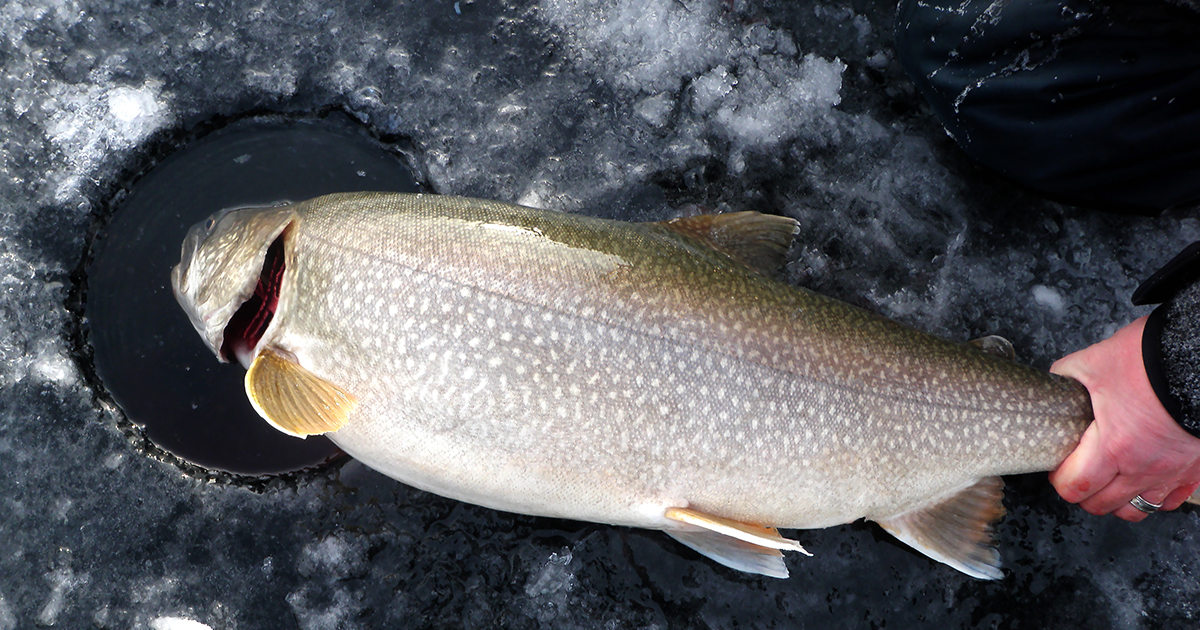
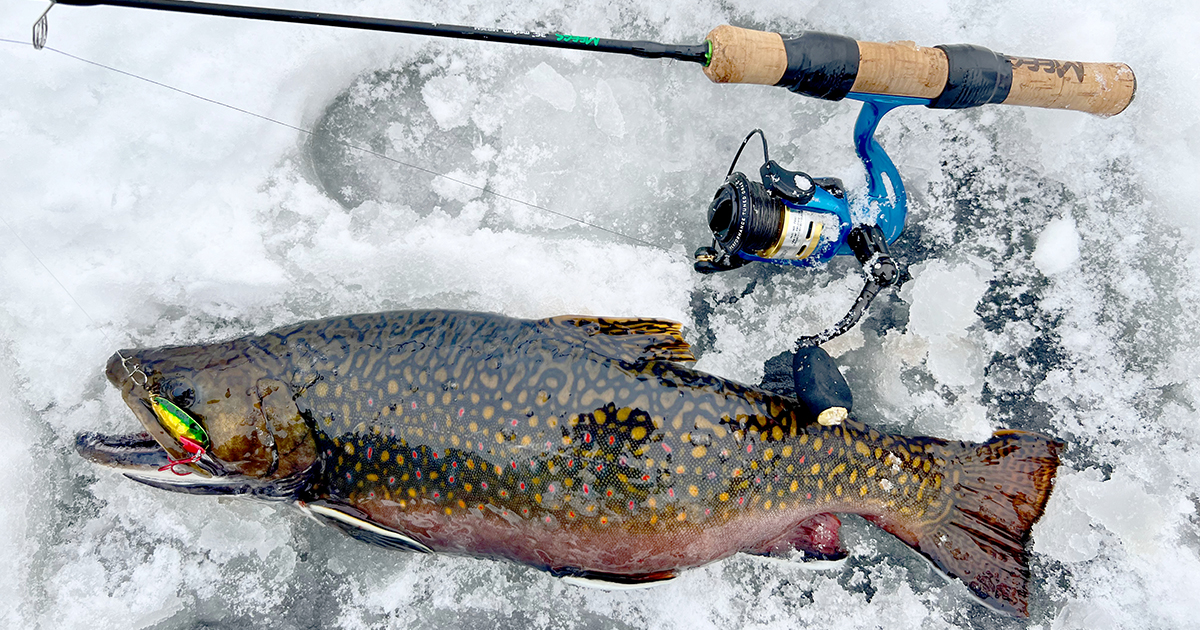
Finding lush aquatic vegetation when ice fishing can be like striking gold. Get on the right veg at the right time, and you can experience stellar catches of yellow perch, crappie, walleye, northern pike, and several other fish species. On the flip side, certain wintertime scenarios see fish push away from plants. Here is how to make sense of when to lean in to weedy areas and when not to. It’s a timing thing In the Forage Factor (see Nov.-Dec. 2023 issue) I discussed how plankton activity around dawn and dusk can stimulate feeding throughout the food chain. During these times, an area with vegetation near a drop-off plunging into deep water is a reliable place to catch predators taking advantage of the food surplus. This applies to bluegills and crappie filter-feeding on plankton as well as walleye, whitefish, lake trout, and pike prowling for larger meals. Think of large weedbeds near deep water as food shelves active fish use for getting an easy meal. These dine-and-dash sites may occur along the outside edge of weedbeds, which offered good first ice action. Isolated weed clumps close to deep flats and basins also deserve attention. Not every aquatic shrub rooted beside a drop off is going to be a productive location, however. Good fishing areas tend to contain several habitat elements. Fish tend to concentrate and move around using points, turns along a drop-off, old creek channels, and other structural pathways. A little green goes a long way Tall, thick weedbeds containing sizeable plants, like cabbage or milfoil, aren’t the only green spaces you’ll find fish in winter. Some of my best spots for yellow perch and walleye are mid-depth flats lined with short, thin sand grass. Chara is another good find. Crayfish and other invertebrates love hiding in the nooks and crannies of this short-growing, tumbleweed-like plant. Perch gravitate to the above areas to feed on various edibles, which attracts larger predators, including walleye, pike, and lake trout. A sparse blanket of vegetation can also be an important find when ice fishing for brook and rainbow trout. When fishing short-growing vegetation on shallow flats in clear water, take the time to look into the water or use an underwater camera to study the area’s makeup. I suggest this because sometimes specific pieces of habitat have an X-factor quality where fish congregate. When sand or mud flats have limited patches of