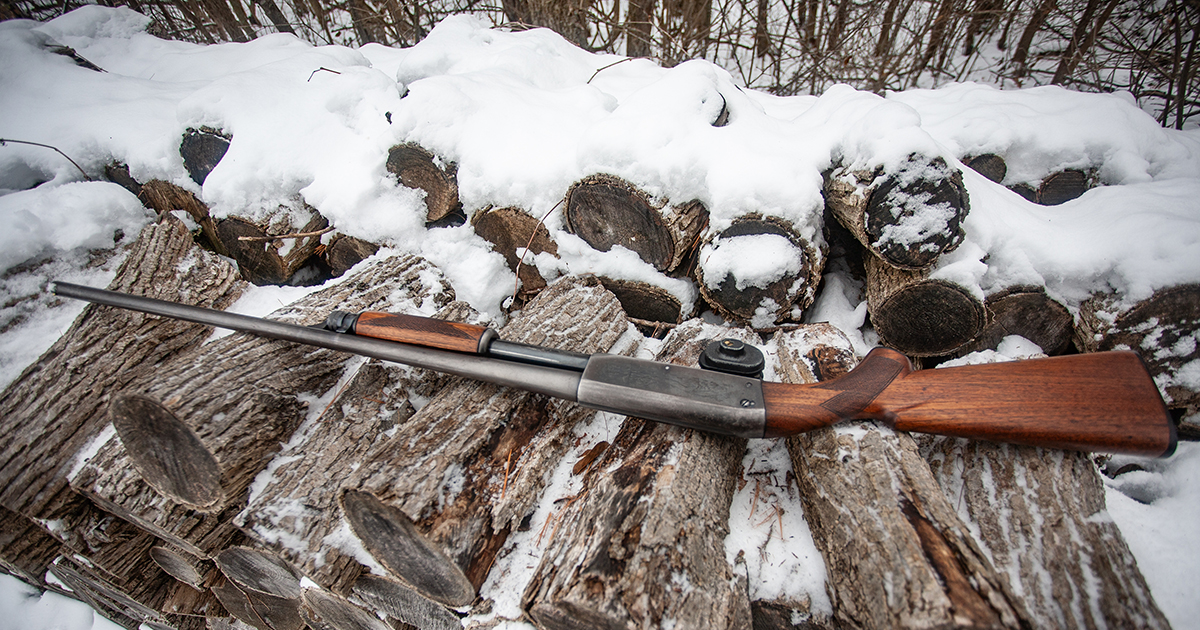
The side-by-side shotgun’s (SxS) popularity peaked in the mid-twentieth century, when most Ontario farmers and hunters still had 10- or 12-gauge double-barrels. But they were quickly replacing them with newer, more versatile shotguns. The volume of remaining vintage SxSs available today begs several questions. How did they evolve? Why did they decline? Is there hope for a comeback? Side-by-side evolution Side-by-side shotguns first appeared in the early 18th century. Their design reflected the muzzleloader’s exposed hammer technology. This simplified adding another barrel and hammer to the other side of the action. American and European gunmakers refined their craft over the next century. Fundamental changes in the second half of the 19th century, however, determined the current design. Technological breakthroughs included break-actions (1858), self-contained cartridges and breach-loading firearms (1858), hammerless technology (circa 1870), Anson & Deeley Boxlock (1875), and the adoption of smokeless powder by the turn of the century. English gunmakers played such a pivotal role that their names for key components endure. Noteworthy firms include Purdey, Westley Richards, W.W. Greener, and Holland & Holland. Belgian gunmakers also made quality side-by-sides, trade guns for other companies, and especially knockoffs. Top American SxS gunmakers include Parker Bros., L.C. Smith, Lefever, Ithaca, and A.H. Fox. For the American West, Remington, Ithaca, and Colt made short barreled “Coach Guns.” While law enforcement favoured 10-and 12-gauges, market hunters preferred eight-gauges for waterfowling until they were banned in 1918. Classic variations side-by-side shotgun Side-by-sides look simple. They all have a break/ hinge action, buttstock, action body, two barrels joined side-by-side, and forend. But they are mechanically complex with many variations in all components. There are two basic lock types. The original sidelock has metal plates inset into the buttstock behind the action body on each side of the gun. Numerous visible pins and screws hold the lock parts for each barrel. With a boxlock, however, all the firing mechanisms sit in a metal box behind the action body. This makes them simpler and more dependable. Barrels were hand-forged by twisting or welding alternating strips of iron and steel around a central core until the early 20th century. These Damascus or laminated barrels show distinctive spiral patterns. For modern barrels, a solid steel bar is drilled, reamed, and polished to the correct gauge. Older or cheaper side-by-sides have exposed hammers. Ones made after 1870 are usually hammerless with tang safeties. Doubles can also have two independent