Poorly invested money isn’t really gone — it’s just in someone else’s pocket. The same goes for a mouth call in a poorly designed turkey vest. It’s not lost, but you never know which pocket it will end up in. To be well invested, a turkey hunter’s vest should have three essential Cs: compartments, camouflage, and comfort.
Camo
While a vest has less surface area than a jacket or pants, it still plays a role in concealment. Matching camo isn’t essential — turkeys aren’t fashion critics. In fact, a slightly different pattern can help break up your outline.
Browns and greys are perfect for the early season. While green is better later on, it isn’t really necessary. The original tree bark pattern of browns and greys in vertical lines is deadly all season when leaning against a tree. Your best camo is being completely still.
Compartments
A well-organized vest ensures you can always reach your gear. Key compartments include:
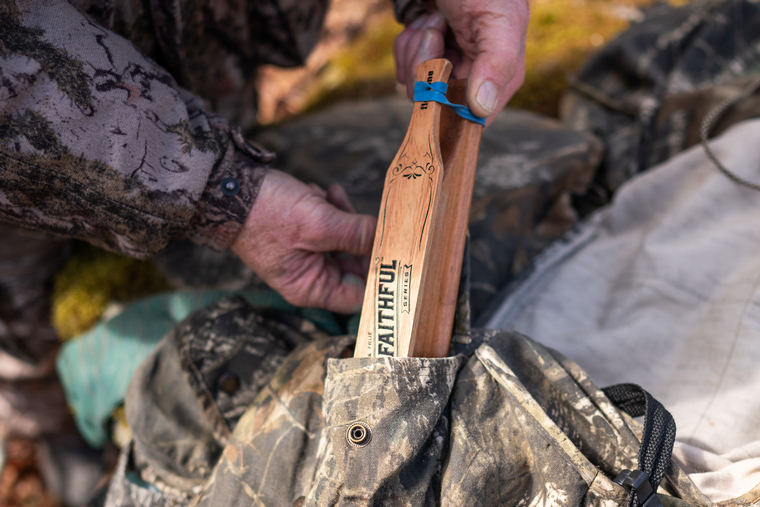
Silent box call holster: A loose box call can give you away with an unwanted chirp or squawk when crossing obstacles. A good holster secures the paddle tightly, is easy to access, and positioned where you won’t accidentally sit on it.
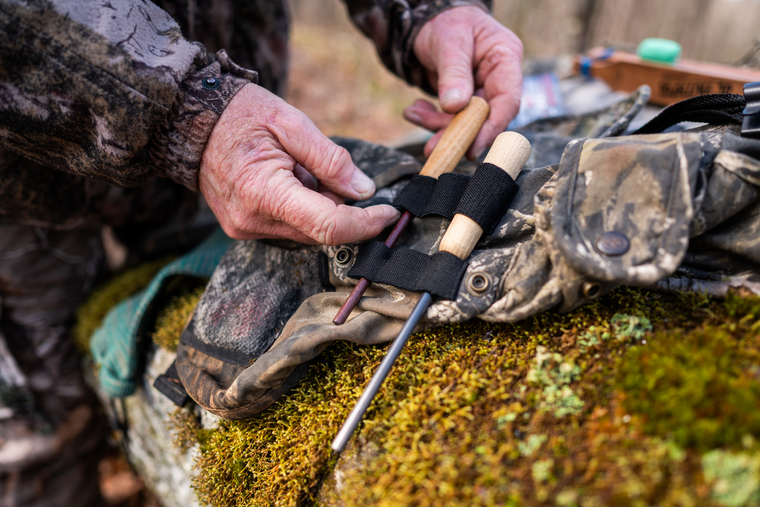
Divided pot call pockets: Keeping pot calls separated prevents them from rattling together and wearing out. Secure peg holders and shotshell loops ensure these essentials are always within reach, not lost on the trail or buried in your vest.
Lanyards for locator calls: These make access quicker and quieter than fumbling through multiple pockets.
Game pouch: The only back compartment should be a game pouch, large enough for carrying decoys out and a harvested tom home. A secure sleeve or fastener for decoy stakes is a bonus.
Secure closures: Magnetic fasteners, press snaps, or zippers are ideal, as they prevent noise and stay functional over time. Avoid hook-and-loop (Velcro) — they are too loud and collect debris.
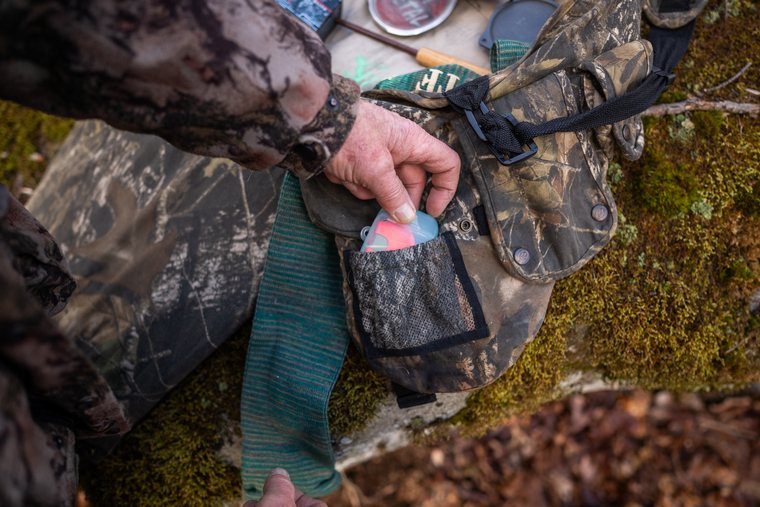
Mouth call compartment: A small, secure pocket dedicated to mouth calls keeps them from getting misplaced in a jumble of gear.
Comfort
Staying still requires comfort, so your vest should support long hours in the field. Here are some things to look for:
If your vest’s built-in cushion isn’t adequate, carry a separate one and use the vest’s seat as added back support against a tree trunk.
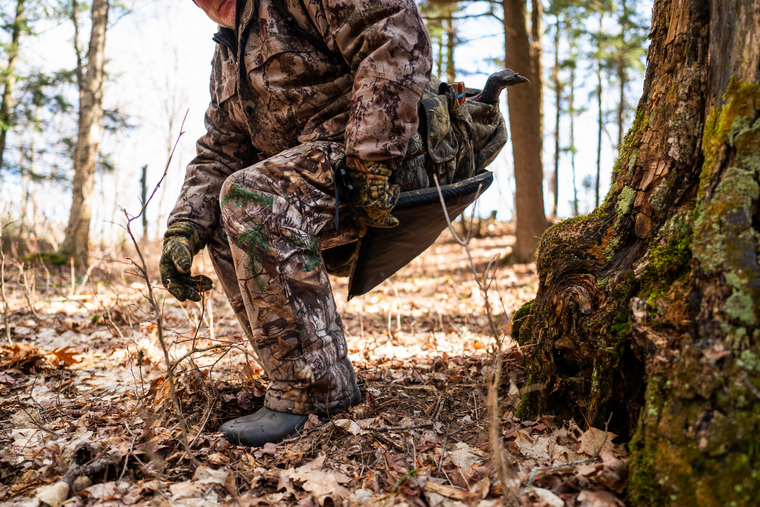
Seat cushion: A drop-down seat that’s wide enough, waterproof, and made of high-density foam. Low-density foam compresses quickly, offering little support over time.
Back padding: A small pad between the shoulder blades improves comfort against rough tree bark.
Recliner vests: For hunts in pop-up blinds or open setups, a vest with an external frame and retractable legs provides a built-in chair. Just ensure dense vegetation behind you to break up your outline, and use an orange safety flag to prevent other hunters from mistaking you for game.
When gearing up for your hunt, balance is key — stay prepared without being weighed down. A well-equipped vest makes for a more efficient, enjoyable, and successful hunt.
My stuff
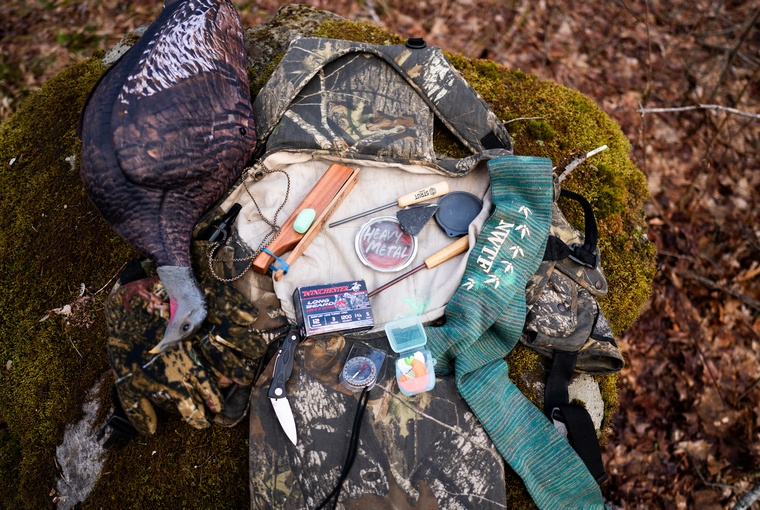
Besides any decoys, I usually pack my vest with...
Various calls (pot, box, mouth, locator)
Pot call conditioners and box call chalk
Gloves and face mask
Knife, headlamp, bug repellent, and hunting licence
Pruning shears for clearing obstructions
Compass or GPS, water, and snacks
Rangefinder
Gun sock for transport after legal shooting hours
Originally published in the Spring 2025 issue of Ontario OUT of DOORS