On many smaller lakes that don’t have a boat launch, I fish from a light 12-foot tinny I can tote pretty much anywhere.
I recently made the move to electric (I found a deal on a three-horsepower Spirit 1.0 ePropulsion), and sold my gas outboard. Before I could use it, however, I ran into some challenges. For one, the transom on my tinny was badly rotted. Plus, the motor I bought — sight unseen — was a long-shaft model. The transom was beyond repair and would have to be replaced and modified to accommodate the longer shaft. Here's how itʼs done.
1. Remove the nuts: With hand and power tools, I removed the badly rusted screws, nuts, and bolts that held the old transom to the stern. The original wood transom had been glued to the aluminum, but once the bolts and screws were removed, the two pieces were easy to pry off.
2. Scrape the crud: A scraper removed the glue residue and a rag soaked with vinegar and some elbow grease did a good job of cleaning.
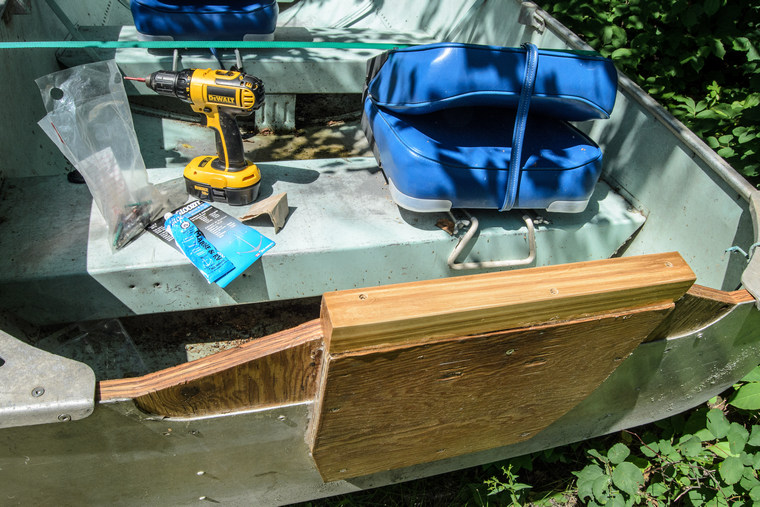
3. Cut your transom: I used the old transom as templates for my new transom of 3⁄4 -inch plywood. One piece was the breadth of the transom on the inside of the stern, the other on the outside (see photos). To accommodate the longer motor shaft, I made the outer mount bracket five inches higher. I also angled the inside piece up to be flush with the outer piece.
4. Protect it: The plywood was sanded to fine and then several coats of marine grade Spar varnish were applied. I re-attached the two steel plates from the old transom. One identified the boat brand, the other was the Canadian Ministry of Transport-approved power and capacity limitations.
I liberally coated both panels with Gloozit marine and RV glue, and then clamped them into place on the boat.
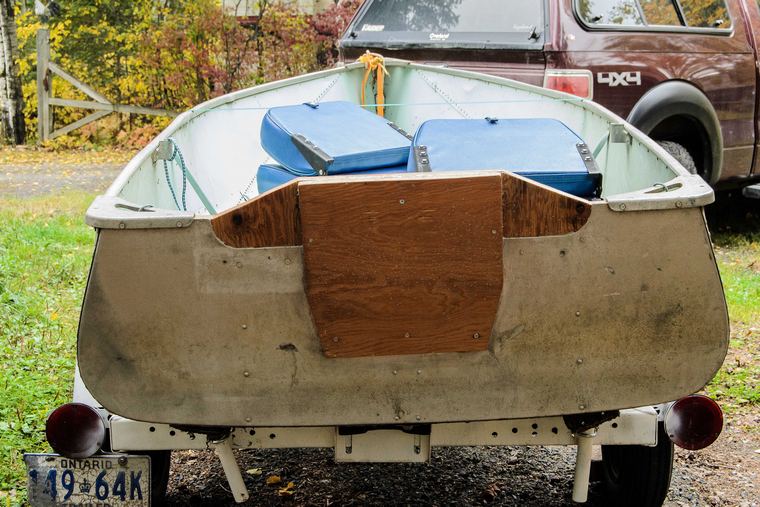
5. Drill & screw: I used the existing three holes in the aluminum to drill through the wood and with #10 stainless steel bolts, lock washers, and nuts, I secured the outside piece of the transom to the stern. I used #10 stainless steel screws through the existing holes in the stern to secure the outer piece of transom.
Because the aluminum stern was thin, I screwed the two wood panels above it together. After applying a generous amount of glue to both surfaces, I used 11⁄4" stainless screws, again pre-drilling to prevent splintering.
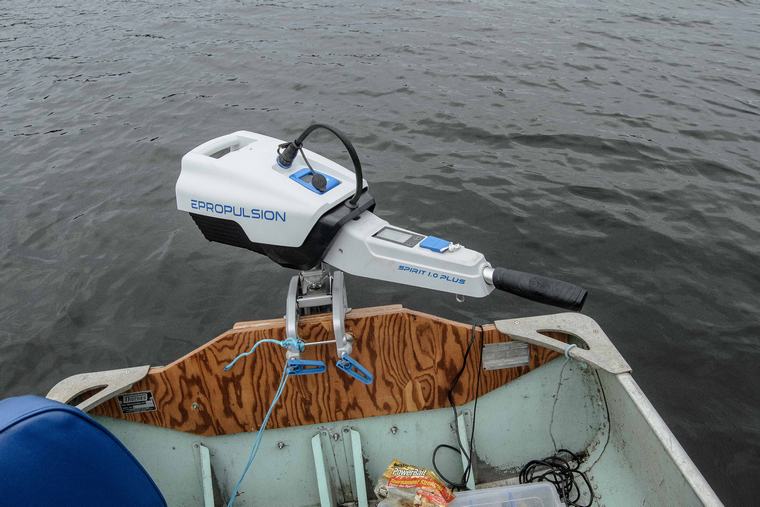
Verdict: After a couple of fishing trips, the shaft still seemed long for the boat. So, I fitted a one-and-a-half-inch varnished piece of hardwood on top, which raised the prop but still kept the clamps of the motor on the plywood, retaining its strength.
It may not be perfect — the motor is really designed for a sailboat — but it’s light, powerful, speedy, quiet, and trolls like a dream. Overall, it was worth the work.

Originally published in the Jan.-Feb. 2025 issue of Ontario OUT of DOORS