Q: When using leaders for pike and muskie, I have noticed that many anglers are using fluorocarbon instead of traditional wire. Is it tough enough? Won’t these fish bite through it?
Jeff "Gussy" Gustafson responds: Growing up in northern Ontario, we always used leaders with our lures when fishing for pike or muskie. If you didn’t, those toothy critters would take them — it was about as guaranteed as snowfall each year in our province. As pike and muskie fishing has grown in popularity, more anglers are turning to heavy fluorocarbon leaders instead of the traditional wire leaders that have been used for decades.
Fluorocarbon offers several advantages: it provides an almost invisible connection to your bait — especially important in clear water — and its flexibility can give your lure a more natural action. It’s also extremely tough, particularly in higher strengths, with excellent abrasion resistance, which often translates to a longer-lasting leader.
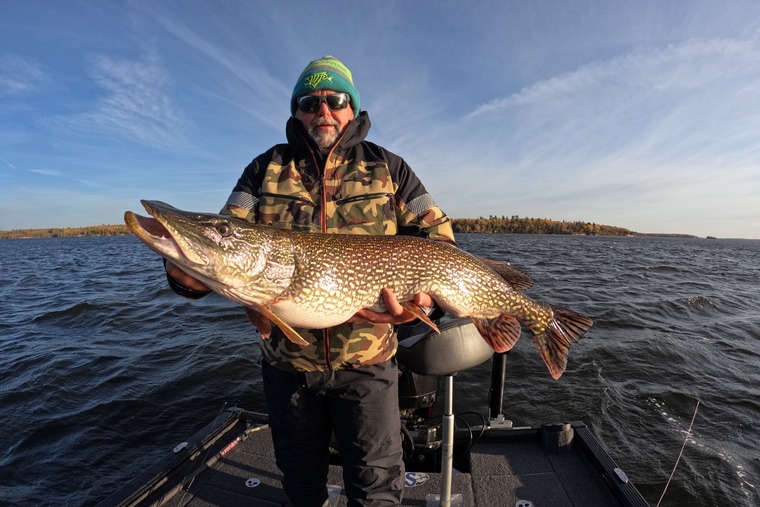
That said, fluorocarbon isn’t bulletproof. While I’ve never personally had a leader fail, I’ve heard of anglers getting bitten off while using fluorocarbon. I’ve made my own leaders using 100-pound fluorocarbon and never had an issue. I’ve even used it to tie quick-strike rigs for tip-up fishing in the winter without a single failure. A couple of muskie guide buddies of mine, who spend a lot of time on the water, swear by 130-pound fluorocarbon for their leaders and have never had one give out. If you do use fluorocarbon, be sure to inspect it regularly for any nicks or weak spots — especially after catching a fish.
For anglers who prefer trolling, the go-to leader set-up is often a longer 48-inch fluorocarbon leader. Its abrasion resistance offers great protection if your line drags along the bottom, and it’s gentler on muskies that roll in the line during the fight. Fluorocarbon is less likely than wire to injure fish. Wire leaders are still widely used and effective, but fluorocarbon offers some clear advantages when you’re looking for the best tool for the job. I’ve been making my own leaders and have experimented with both crimps and knots for my connections — both methods have worked well for me.
Jeff “Gussy” Gustafson, from Kenora, grew up on the shores of Lake of the Woods and is a fishing and hunting guide, tournament angler, and outdoor writer. He also competes on the Bassmaster Elite Series in the US, the highest level in professional bass fishing.
Send your questions by clicking here
Originally published in the June-July 2025 issue of Ontario OUT of DOORS