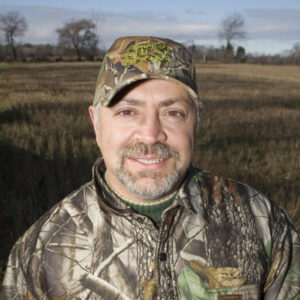
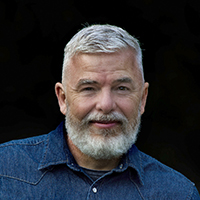
Garry Bolton, an eastern Ontario hound hunter, has won a noteworthy case that helped clarify an important legal definition in the Fish and Wildlife Conservation Act (FWCA).
The case was initiated when a landowner called Ontario Provincial Police (OPP) wanting trespassing charges laid against Bolton, who was trying to collect his hounds that had crossed over from land he had permission to be on into the landowner’s property during a coyote hunt.
The responding OPP officer did not charge him with trespassing. Nor did a Ministry of Natural Resources Conservation Officer (CO). He did, however, charge Bolton with “permit dog to be at large during closed season” contrary to section 25 (3) (b) of the FWCA.
Bolton challenged hound case
Bolton challenged it in court. In Nov. 2024, Justice of the Peace S. Goffin, in a Brockville courtroom distilled the case by saying, “The single issue for trial is whether the evidence establishes beyond a reasonable doubt that the dogs were, in fact, running at large.”
In her reason for decision, Justice Goffin noted there was no case law on that point.
She added, “The issue of a definition of what it means to state that a dog is ‘running at large’ pursuant to the Fish and Wildlife Conservation Act is not one that has been determined by any court of law to date.”
She also noted there is no definition of “running at large” under the Fish and Wildlife Conservation Act. Based on the arguments and legal definitions, Justice Goffin accepted that the definition under “running at large” involves an assessment of whether or not the hunter has control of their dogs.
No evidence found
She then concluded “There is no evidence before the court of Mr. Bolton being irresponsible in how he managed or handled the dogs. I find that by way of training, GPS tracking and monitoring, following with the vehicles in a timely fashion, and being able to have the dogs respond to his calls, the hunter is, in fact, exerting the necessary control that does not support a finding that he contravenes Section 25(3) of the Fish and Wildlife Conservation Act. … His dogs were controlled to the extent that they could be in keeping with the legislation and the intent of same. They were not running at large. The charge therefore is dismissed.”
Joe Wilson, Chair of the Ontario Federation of Anglers and Hunters Sporting Dog Advisory Committee said, “I am pleased that this case was decided as it was. I’d like houndsmen and other hunting dog owners to be informed on this and other related issues. I would invite them to go to www.ofah.org/zonef/wp-content/uploads/2020/12/Code-of-Conduct-Hunting-With-Dogs_brochure.pdf on Code of Conduct with Hunting Dogs.”
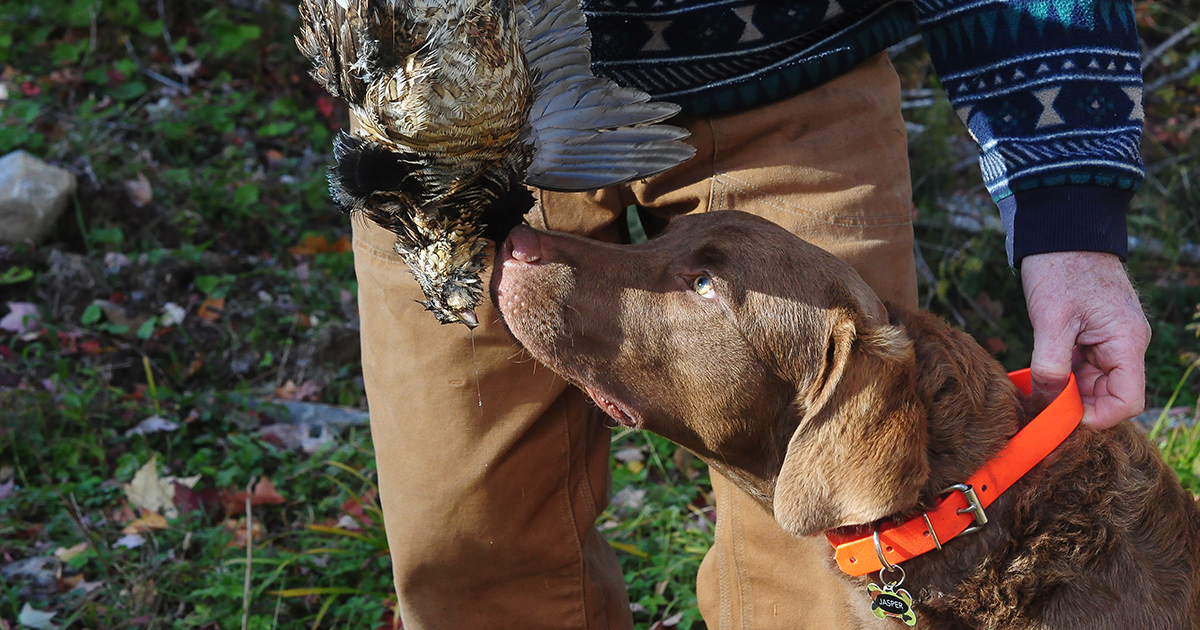
For more on gun dogs, click here
Click here for more outdoors news
Watch on-demand videos anytime on OFAH Stream