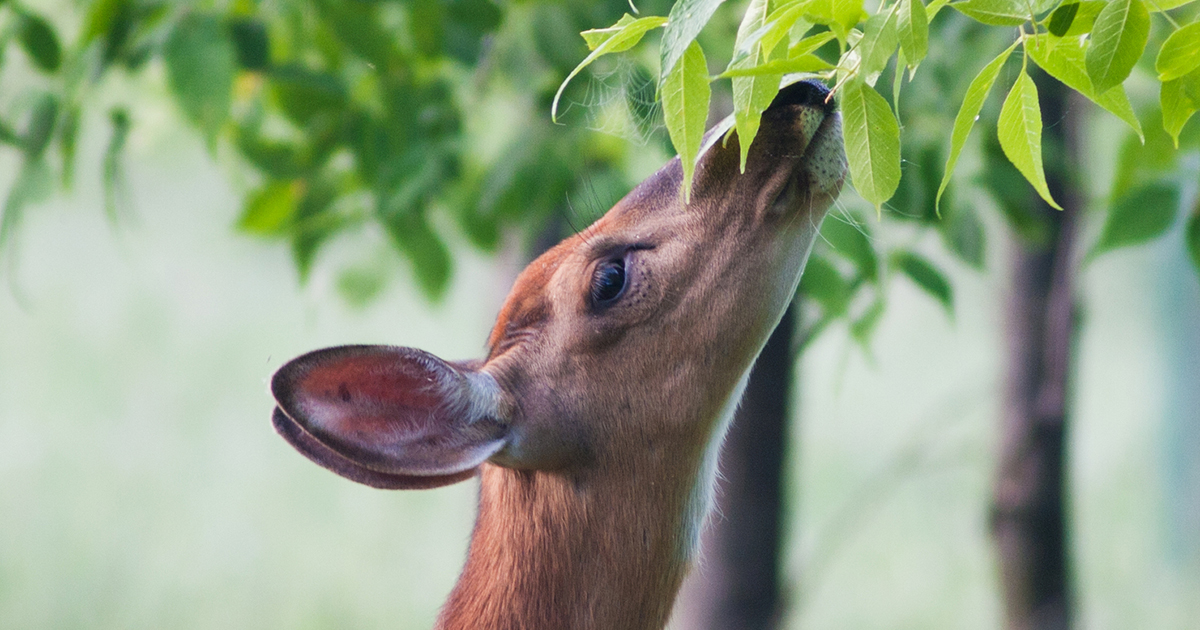
I stepped forward slowly, shifting my weight onto the damp leaves and twigs beneath. Another step gained, I stopped and, with minimal movement, surveyed the sombre November hardwoods. A small puff of exhaled breath confirmed I was still advancing into a gentle crosswind. Three sets of crisp tracks told me deer were nearby. Then, movement caught my eye. A seven-pointer materialized from the thicket about 90 metres upwind of me and, with the reckless single-mindedness of a young buck in full rut, trotted steadily, nose to the ground, weaving towards me through the hardwoods. Its destination was presumably the cedar swamps beyond, where two fresh sets of doe tracks led. The buck never got that far. The decision to still-hunt paid off once again. A quick definition Still-hunting is the act of prowling woods, ravines, marshes, or field edges in search of deer. Unlike stalking, the still-hunter is not sneaking within shooting range of a specific deer that’s been spotted. Instead, he’s cruising slowly and quietly through prime habitat looking for deer. The idea is to spot and shoot an animal before it even knows you’re there. Traditionally, this tactic is employed by a lone hunter, but two hunters, one trailing the other by 90 metres or so, can also be effective. My first Ontario buck was taken this way. I won’t argue that the vast majority of white-tailed deer are harvested by hunters who sit on a stand and wait patiently for deer. But sometimes weather conditions and terrain favour the mobile methods of the still-hunter. Rarely will you see a deer’s entire body. A steady rain, howling wind, or fresh snow, for example, can mask the hunter’s sounds and movement, while at the same time impair the deer’s sense of smell, hearing, and vision — sometimes to the point where they simply bed down and wait out the weather. Likewise, terrain features such as cedar swamps, trails edging cattail marshes, old logging roads, rows between standing corn, rocky ridges, and moss-covered meadows are all advantageous to the still-hunter. Whenever conditions or terrain features like these are available, consider still-hunting. In fact, the only time I won’t use this method, for safety reasons, is when the woods are crowded with other hunters. So, what does it take to sneak up on a deer? The proper mindset Of all the things a successful still-hunter needs, none is more important than