
Penguin Canada
MSRP: $45
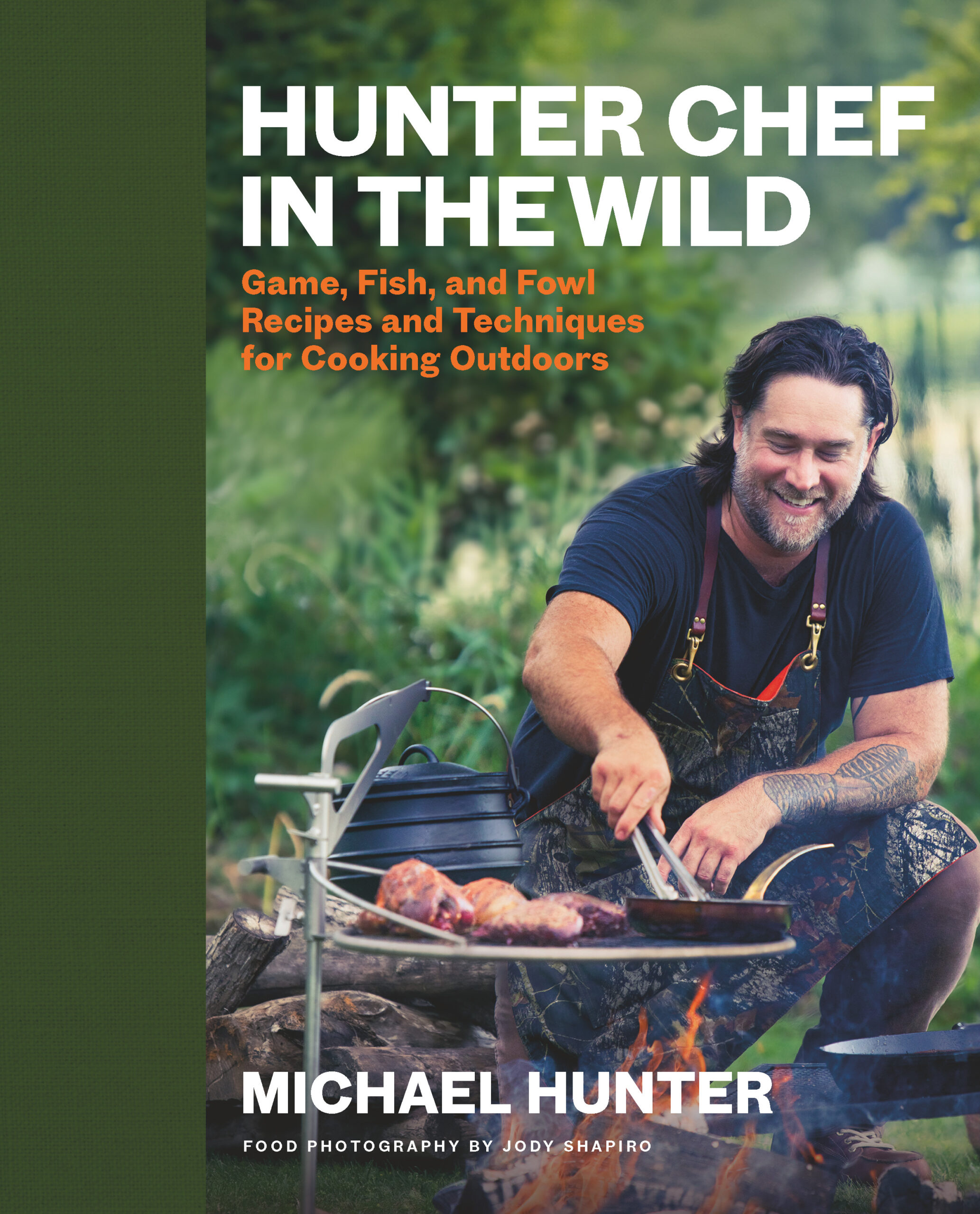
Hunter, angler, and outdoor chef Michael Hunter is reducing the gap from food to table in his new book, Hunter Chef in the Wild, which came out in September 2025. We corresponded about his culinary beginnings, elevating less-appreciated meats, as well as the importance of both mentorship and conservation in the outdoors; a vocation which has proven to be as deliciously consuming as the fare it provides.
OOD: How did you approach Hunter Chef in the Wild differently from The Hunter Chef Cookbook (2020)?
MH: My first book turned into a 10-year project which started off as a dream. I didn’t have a publisher or real direction. I just wanted to teach people about cooking with ingredients that were wild, foraged, caught, fished, or hunted. My hunting mentors were terrible chefs, and believed that turkey legs, deer neck, shanks, and goose legs were inedible. I wanted to teach my friends how to get more out of their harvests.
My second book is an exploration of live-fire cooking, where cooking outdoors over coals or wood simply tastes better. I showcase various methods and techniques to make it a little easier for everyone at home.
OOD: What inspired you to become a chef?
MH: From as early as I can remember I have always loved food. As a kid I’ve always had an insatiable appetite in trying new things. I initially applied for a summer job when I was 13 years-old at a local gas station/diner and found myself in the kitchen where they needed help.
OOD: Who was your biggest influence when it came to the outdoors?
MH: My first real mentor was our family friend that was the huntsman/hounds man at our local riding and hunt club where my family belonged. My family background is from the UK and I rode horses alongside the fox hounds as a kid, mainly hunting coyotes. He took me on my first turkey hunt when I was a teenager, and I was hooked after that.
OOD: You’re a leader when it comes to bringing wild game to more mouths and expanding folks’ culinary horizons. What have you enjoyed most about this? What are some typical reactions you get from those who haven’t tried game?
MH: It has been a blessing to inspire others to try new things, and the greatest satisfaction is when people enjoy what they are eating. The biggest compliment is when people comment “this doesn’t taste gamey” or “I didn’t know you could eat the shanks.”
OOD: As a Humber College alum and restaurateur, what advice do you have for those looking to survive and thrive in the hospitality industry today?
MH: It takes an incredible amount of sacrifice to be a chef. Years and years of hard work for low pay as an apprentice to learn the craft. TV has really glamourized the industry and for young kids coming out of chef’s school the manual labour aspect can be a total shock.
OOD: What does conservation mean to you?
MH: Preserving the outdoors for the next generation.
What is your favourite sport?
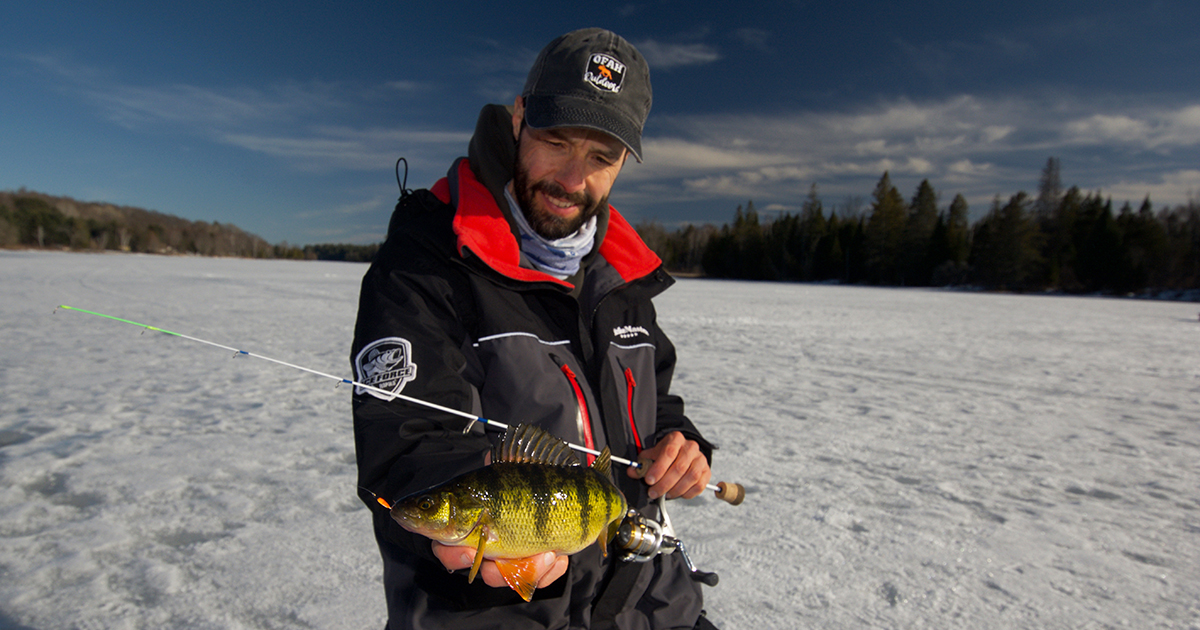
Anything in the snow! Ice fishing is up there.
Your preferred firearm?
I started hunting with archery as a teenager but I gravitate more towards rifle and shotgun now. I really enjoy sporting clays, so my shotguns get a lot of action.
Your dream hunting/fishing destination?
Northern BC or the Yukon for some kind of goat or sheep.
Favourite fish to eat?
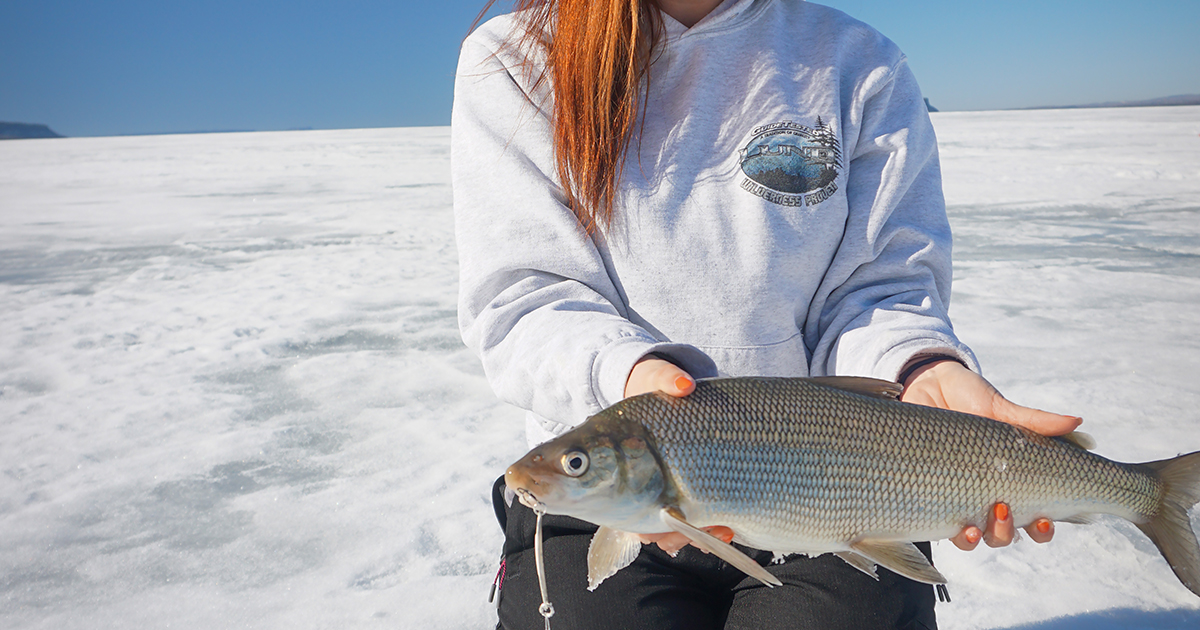
These are so hard for me to answer because I really love it all. Anything caught with my family. I like to experiment with things people don’t like. Carp for instance is wonderful smoked.
Favourite spot to fish?
Georgian Bay and Lake Simcoe.
Favourite game to hunt?
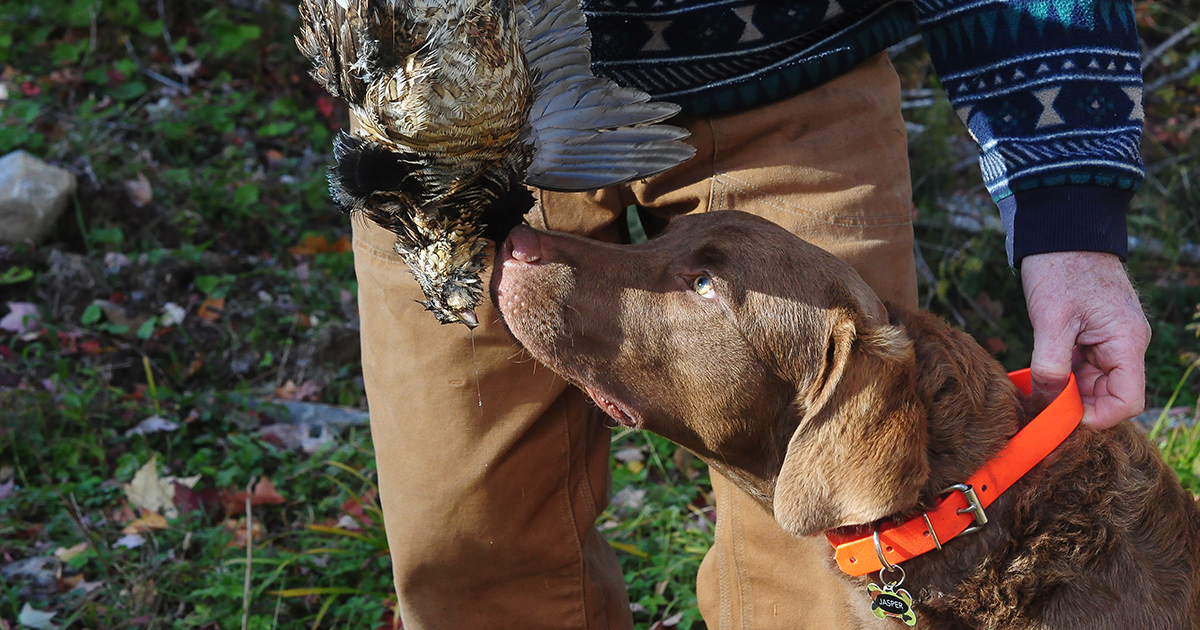
I love it all, but upland is great fun. I love hunting with the dogs. Duck hunting in a blind with my family and close friends is up there. Archery-hunting whitetail late season when you can see the steam coming from their nostrils gets my heart pounding.
What remains on your culinary bucket list?
I really love to travel and experience cuisine from different cultures. I’d like to travel more in Europe and Asia.
Your favourite spice/garnish?
There’s a couple dry rubs in the book!
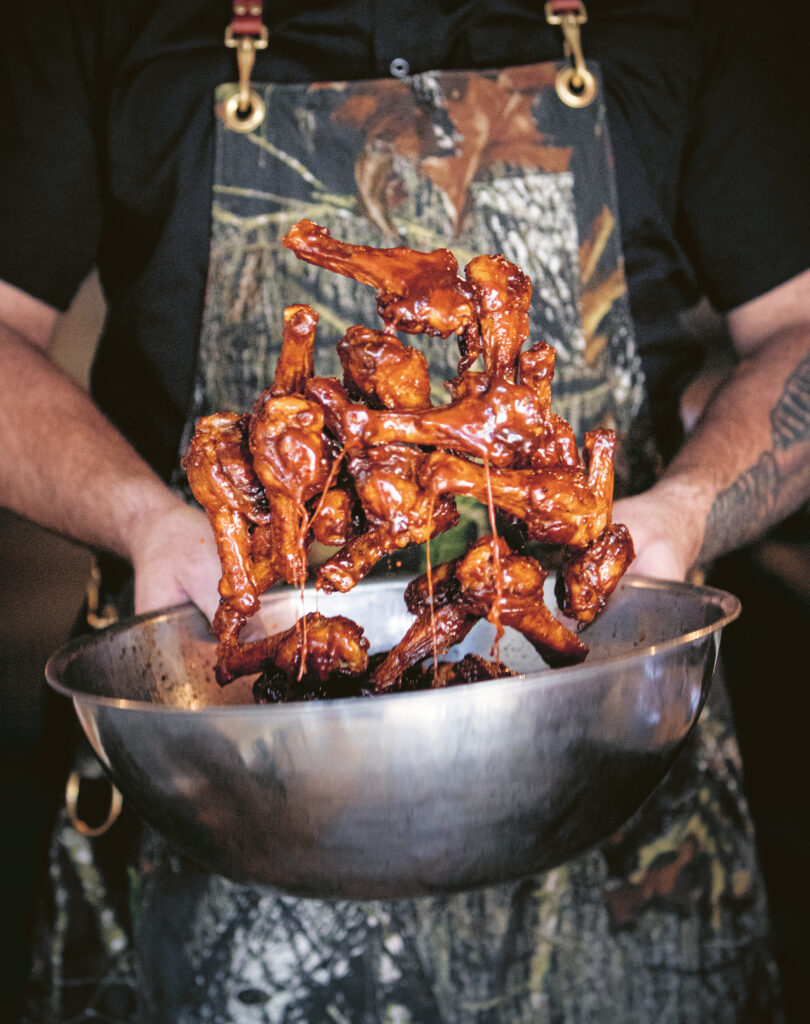
This is one of my favourite recipes to enjoy with friends, whether for a football game or just a fun night together, because it’s such a crowd-pleaser. Chicken wings are no comparison. Farmed duck wings tend to be larger than wild duck wings but similar to wild goose wings. Both farmed and wild are much tougher than chicken wings and must be smoked for a lengthy period to break down, but it is worth it, I promise.
Ingredients
Serves 4 to 6
Smoked duck wings
Maple hot sauce
Directions
In a large bowl, stir together the paprika, brown sugar, salt, garlic powder, onion powder, black pepper, and cayenne pepper. Add the duck wings and mix to completely coat in the dry rub. Cover and refrigerate overnight.
Heat a medium saucepan over high heat. Add 1 tablespoon (15 mL) of the vegetable oil, the chilies, garlic, bay leaves, and thyme. Sauté until the chilies are soft, about 5 minutes. Add the remaining vegetable oil, reduce the heat to low, and gently cook the chilies and garlic, without letting them simmer in the oil, until very soft, about 30 minutes. Remove from the heat. Discard the bay leaves and thyme sprigs.
Purée the sauce with a hand blender or transfer the sauce to a blender and purée until smooth. Season with the salt, then add the maple syrup and stir. Strain the sauce through a fine-mesh sieve into a container.
Reserve if you are using right away or store in an airtight container in the fridge for up to 2 weeks. Bring to room temperature before using.
Remove the wings from the fridge. Prepare your smoker at 225°F (110°C). Place the wings directly on the grill of the smoker and smoke for 1½ hours. Transfer the wings to a baking sheet and wrap the tray tightly with foil. Return to the smoker and smoke for another 1 to 1½ hours, until the wings are tender and can be pulled apart. (Avoid cooking until the wings fall apart or they will be difficult to handle and eat.)
Toss the wings in the maple hot sauce and serve.
Originally published in the Fall 2025 issue of Ontario Out Of Doors