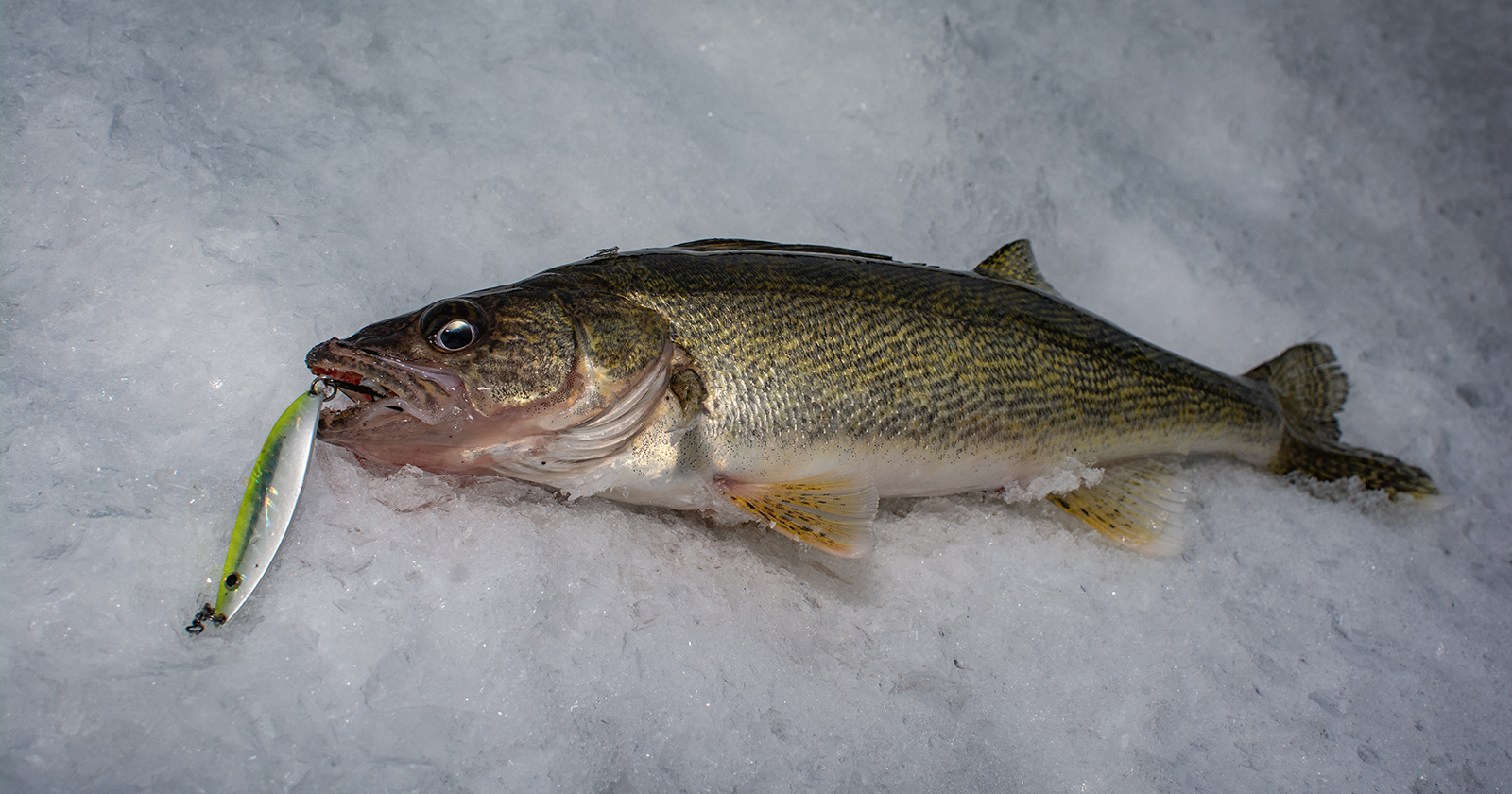
How to retrieve 1. Start with the rod pointing down at the 4-o’clock position. 2. Next, snap the rod downward to 5 to 6 o’clock. The key here is that there is slack in the line when the rod is snapped downward. If the line is taut the bait won’t move as it is intended to swim. 3. Quickly return the rod back to 4 o’clock, while reeling in some line to account for the distance the bait has travelled. 4. Don’t reel too much line, as the lure needs slack to dart to the side. 5. Repeat 1 to 4, but include pauses to create a cadence. Example: jerk-jerk-jerk-pause, jerk-jerk-pause, jerk-jerk-jerk-pause, and so on. Water temp and tempo Experiment with how fast and far a jerkbait is moved, along with how long it’s paused to learn the best retrieve to match fish mood and activity level. Where to fish: Jerkbaits fish best in clear to semi-clear water. Good spots: rocky shorelines, points, and mid-lake structures. Use different casting angles to cover these areas. sand and grass flats. Cast the bait near light-dark edges and swim it over the tops of the vegetation. ledges and drop-offs. Retrieve the bait perpendicular to the break and fan cast to cover a range of depths. anywhere fish are actively feeding on baitfish. Colder water -> slow retrieve -> light to aggressive snaps, longer pausesWarmer water -> faster retrieve -> aggressive snaps Species Although jerkbaits are favoured among bass and walleye anglers, they can be used to catch most species of fish in Ontario, including steelhead and salmon, inland trout, panfish, and pike. They’ve even been known to hook species you wouldn’t expect, like channel cats and drum. Features There are many styles of jerkbaits. Typically, 3-, 4-, and 5-inch jerkbaits are best for bass, walleye, and trout. Choose smaller for panfish and larger for pike, although a 3- or 4-inch offering can be just the ticket for pressured pike. Beyond size, here are some other popular features. Running depth As a general rule, a jerkbait should swim over fish, not below them. To target fish at different depths during the season, carry shallow (0 to 3 feet), mid-depth (4 to 7 feet), and deep (7 feet or more) diving jerkbaits. Don't be shy about using shallow-diving jerkbaits over deep water. Smallmouth feeding on shad, smelt, and other open-water baitfish will easily swim up 30 feet to eat a jerkbait.