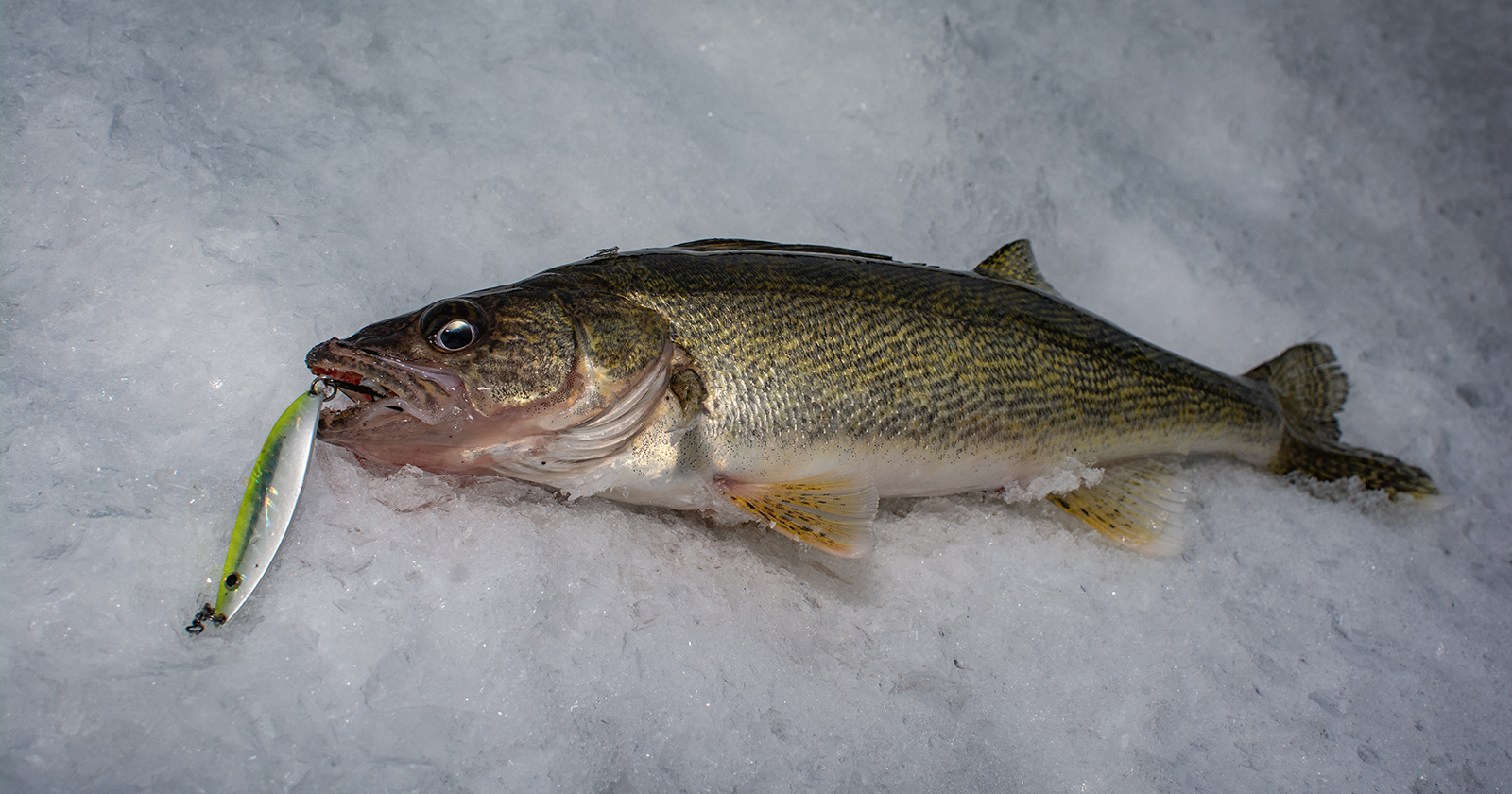
This abundant cold-water species is growing in popularity. Here's a primer on where to find burbot in winter and how to catch them. The green luminescence of the rattle spoon disappears into the soft, sandy bottom. Lazily, the fish approaches with a serpentine swim, its long fin rippling as its thin, streamlined body passes through the icy cold water. The spoon re-emerges in a puff of sediment. The fish turns and noses the bait, detecting scent from the minnow head that’s wafting from the swaying treble hook. It’s a standoff. Above the ice, an angler studies the fish’s movements on a portable sonar. The rod is lowered. The spoon falls onto the sand. The fish’s interest intensifies. It turns downward, the single barbel of its chin touching bottom, and, in an instant, vacuums up the morsel. The angler sets the hook and a drag-peeling battle ensues. In short order a gloved hand grabs the fish and a squirming mass of mottled brown, black, and yellow emerges from the hole as another burbot is caught. Years ago, Simcoe anglers would just leave them on the ice to die and become coyote food. Anglers thought of them as garbage fish and a nuisance. Rising in popularity It could be said that burbot have a bit of a cult following. Pockets of anglers across the ice belt hold these impressive fish in high regard for their tasty meat, which is often described as “poor man’s lobster.” It’s hard to argue with the fact that burbot feed voraciously throughout winter or that catching them isn’t technical by any means. Until recently though, burbot tended to have a bum rap. This could be due to their slimy, slithery nature when handled. Or, perhaps it could be a case of wrong place, wrong time when they bite lures intended for walleye, lake trout, or whitefish. That rap is shifting, however. One man's trash, now gold “It’s funny how times have changed,” said John Whyte, a well-respected ice-fishing authority. “Year ago, Simcoe anglers would just leave them on the ice to die and become coyote food. Anglers thought of them as garbage fish and a nuisance. But now they have become a more respected and targeted species, and are released with the same care given to prize cold-water gamefish. It seems a little education and attention goes a long way to enhancing the winter fishing experience!” This