[Editor's Note: This story was supplied by Richard Hancock, originally written July 2013.]
Some of my most pleasant memories of time spent away from civilization have been the seasons spent at the hunt camp during deer season. I find urban folk do not understand this at all. Those times spent in camp are remembered because of the camaraderie of fellow hunters, often total strangers who accepted me on the word of someone who vouched for my character and competence.
Since the age of eight
I've been shooting since the age of eight, starting with Dad's .22 Cooey with its 27-inch barrel. With his brother, my young father bought it for $6.95 early during the Second World War from the Simpson's catalogue. As for other guns, I still remember the tremendous kick and roar of my grandpa's Riverside 12-gauge double. The apple juice can on that bullrush was never the same afterwards. Both those guns are in my safe right now, being saved for when my son gets his licence, but that double will never be shot again. Age allows retirement with dignity.
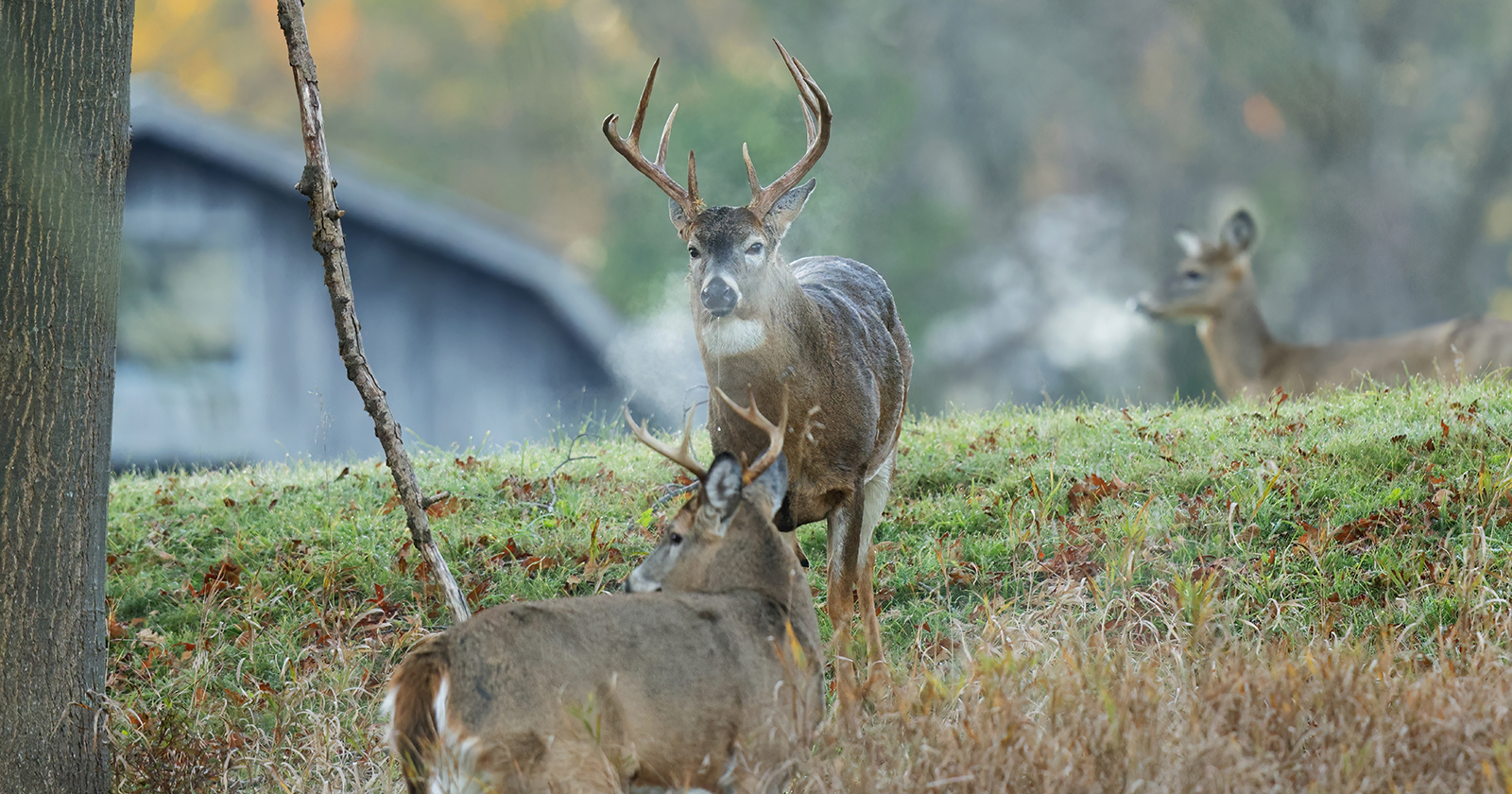
After work, school, dating, and the first five years of marriage, in the early 1990s I was looking to hunt something bigger than groundhogs, and something I could also eat. My father had retired just outside Algonquin Park near Maynooth. When he asked my uncle about hunting whitetails, he was promptly invited to join my uncle's gang. They used a private camp up north on the way to Whitney.
Just so we're clear on this, a group of hunters is called a "gang." There are no bandanas in sight and the only “gang colour” involved is a very bright orange. A "camp" is a bare-bones cottage located roughly north of the French River or Peterborough. South of these points it's still called a “cottage.”
First season at camp
In the summer the camp was used for fishing and small game, but come October it geared up for moose season and for the first full week in November, deer. So off Dad went with his Parker-Hale sporterised Lee Enfield, and a set of new blaze-orange coveralls. The next season I was invited to join as well.
That first season I stayed at Dad's place and drove in with him early (and I emphasize early) every morning for a 6:30 a.m. breakfast. Up at the crack of dark, so to speak. By the time we got there the generator was running and breakfast was well underway. The camp kitchen was run by a fellow hunter who had also run a diner. He worked the propane range like a master and we ate like kings! Mountains of food were put on the table and it vanished into the bellies of men who knew that calories and a good hat kept us warm later.
Eye-opening firearms
Plans were made for the driver and his dogs, where to drop off the hunters who would watch for the deer being driven, and well-meant predictions of where the numerous deer could be expected to go. Rifles were broken out of their cases, and I realized that in Ontario fully a third of those used were old .303s, another third were lever action .30-30s, and the final third anything from my Swedish 6.5x55 Mauser to my Uncle Lloyd's Winchester lever-gun in .38-55. That one was an eye-opener — it looked like it dated from before the Depression and had stayed in someone's closet for eighty years between bouts of being thrashed through wet swamps. Come to think of it, that's probably pretty close to the mark. At the time I'd never even heard of that cartridge before — it looked like a very long .357 magnum.
From logging roads to game trails
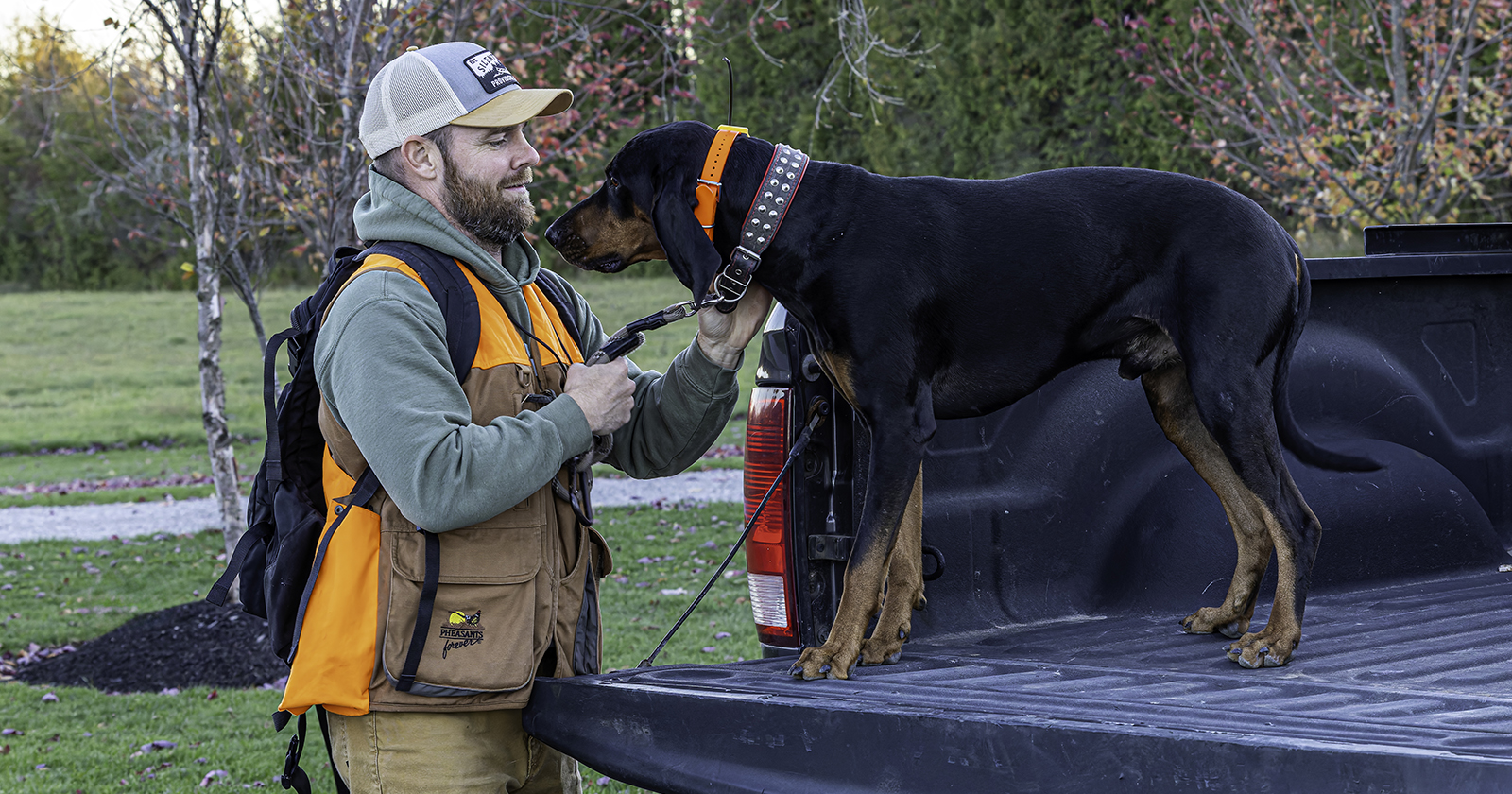
Heavy clothes on, boots on, and out the door to the trucks that would take us on the logging roads to the game trails. Bouncing over muddy ruts, around fallen logs, occasionally using the four-wheel-drive in the tough spots, watching the day brighten into a lighter but dismal overcast gray. Single file into the bush, dropping a man off (sorry, ladies, no females in this gang at the time) at time-proven waiting spots. The older and less in-shape the man, the sooner he got dropped off, which meant the younger ones like me were in for a major walk over hill and dale.
Most mornings consisted of standing in a snowbank waiting for something to happen, with feet gradually freezing. One morning early in the season a deer walked by, but I wasn't comfortable shooting at that range with iron sights. I passed it up, thinking the next guy down the line would have a better shot. Turns out not to be the case. The guys were very understanding, but I had a scope the next season.
After a while the driver and his dogs would come through, and we'd collect up the hunters we dropped off on the way in, winding up back at the trucks. Unload the rifles and bounce back to the camp for lunch and speculation as to where the deer really were. The common consensus was there was an underground bunker somewhere with a calendar on the wall, so that the moose hid underground in October and the deer in November. This explained why we always saw animals out of season, but not when it counted.
After lunch for Act II
After a very ample lunch it was back to the trucks and into the bush for Act II, with the added complication of staying awake in the fresh air after the big meal. I often heard stories of some snoring hunter leaning against a stump, sometimes with fresh deer tracks close by. One guy reported waking while almost being stepped on by a cow moose and her calf.
If anyone actually shot a deer, it was always the young guys who dragged it up out of the snowy swamp over the deadfalls to the road — we really appreciated that bucks came with handles for carrying — while the senior members carried our rifles. We flogged our way through the alders, rocks, and bush back to the trucks, then bounced back to camp as darkness fell. Dad and I would drive in the dark back out to the highway and home to a shower and our own hot meal.
And so ended a typical hunt day.
Next season
The next season I opted to stay in the camp (it had bunks for a dozen guys) rather than commute in and out. This changed my morning routine somewhat. With gun cases on the top bunks, I rose a little later than before, and took my turn fuelling the gas generator that ran the lights and the little TV. The rest of the day was pretty much the same as the previous season. This time frozen feet were not an issue, thanks to an early Christmas present of real boots from my father, whose orange coveralls I could spot through the trees at an amazing distance.
Evening meals were as generous as the epic breakfasts. One night dinner was spaghetti and meatballs (and lots of it) but the meatballs were made with moose meat from October's efforts. Nothing else like it! After supper some played checkers or cribbage, others watched the news till 8 p.m., when as regular as clockwork, the generator ran out of gas and the lights went out. By this time someone usually had the foresight to light a lamp, so it was not completely black. But it was time for bed.
Bedtime howls
For a time we had a visitor who opted to sleep in the camp with us. We had six or seven bunking in at the time, and bedtime came as usual. Hours later I awoke in the dim lamplight, not knowing why. I soon realized all but one of the other men in the room were snoring up a storm, and old Wilbur was leading the charge. Wilbur was in his mid-seventies, and carried an antique .30-30 that had little blueing or wood finish left on it anywhere. He had no teeth left, which made conversation and mealtimes interesting — it was like he had a thick accent. Tonight he was talking in his sleep, most of it unintelligible. Then with surprising clarity I heard "Get away from that goat!" followed by a high-pitched whinny that sounded just like (you guessed it) a goat.
What followed was the visitor and myself howling ourselves to sleep.
After 20 years it still makes me laugh...
Had to be there
I know some camps have hunters more interested in playing cards and getting away from the wife and razor for a week than putting venison in the freezer. My experience is pretty typical for this part of the world. Over the decades I've made some good friends among my hunting buddies, one who knew the Latin names for most of what we saw. Most of the guys didn't give a hoot about super-accurate rifles — just as long as they could hit a dinner plate at 100 yards.
Our cook who ran the kitchen died of cancer soon after I was there, and most of the others from natural causes. One nearly died from an accident while running his sawmill alone. Others have faded over the years into the obscurity of parted ways. My father and I talk often, sharing memories of tramping through the snow and such, and the guys we met and hunted with.
We even got the occasional deer, but that was not the point — not even close.
I guess you just had to be there.
For more voices click here
Click here for more outdoors news
Watch on-demand videos anytime on OFAH Stream