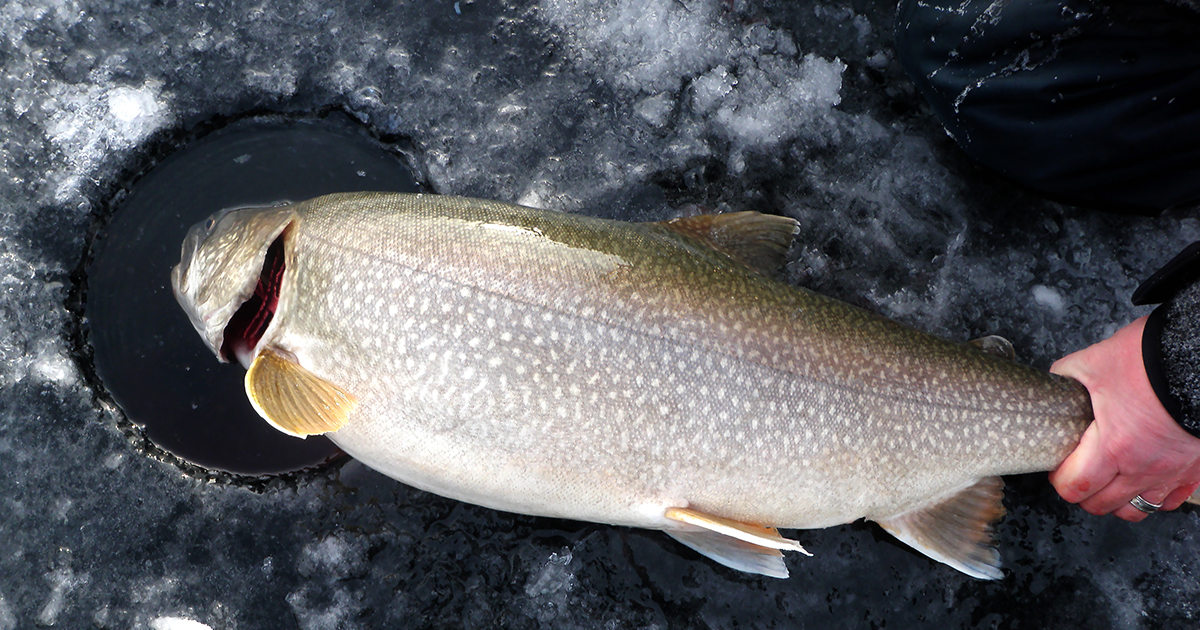
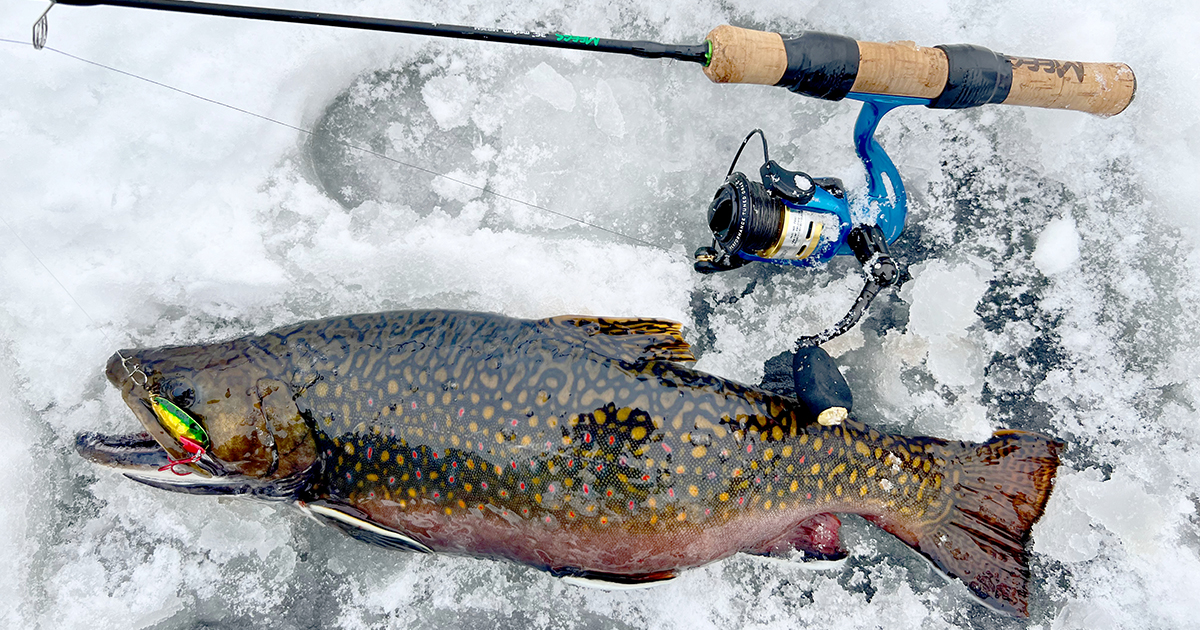
When I think back to the biggest predator fish I’ve seen — lake trout, walleye, and pike — most were pulled through a hole in the ice. Three things will put you on big fish: finding good bodies of water, drilling in the right locations, and showing fish the best presentations, but each species has unique requirements. Let’s break those down by predator. Lake trout get out there early In Northwest Ontario, lake trout anglers look forward to January 1, opening day of a new season. A cold-water species by nature, lake trout are eating machines in the winter and will bite all winter long, but the best fishing usually happens in January, as anglers hit predictable spots and catch trout that haven’t been pressured in several months. By late winter, heavily fished waters are typically full of recycled fish that are harder to fool. Where to go Points and humps that drop quickly into deep water are high-end locations because trout will push baitfish up against these structures and pick them off. If I’m fishing next to a point or hump that has a plateau in 30 to 50 feet of water I like to drill a hole off the edge of the structure, then spend most of my time jigging bait at the same depth as the plateau, because lake trout will cruise over these structures, then swim off of them as they hunt for food, putting them in contact with my bait. Baits for winter predators By far the most popular winter lake trout bait of the past few decades is the white tube jig, which does a good job of imitating a wounded minnow, the favourite forage of large trout. On waters where meat is permitted, lake trout will certainly bite a jig tipped with a minnow or some belly meat, but know your regs, as many waters don’t allow the use of any fish or fish parts for bait. Showing lake trout an artificial bait is all you need to do most days to catch a big fish. While the tube has certainly put a bunch of lake trout on the ice for me over the years, it’s not my favourite for the big ones. I like to choose slightly bigger, more aggressive baits that have the ability to call fish in from a wide radius. Five- and six-inch soft-plastic jerk shads rigged on a