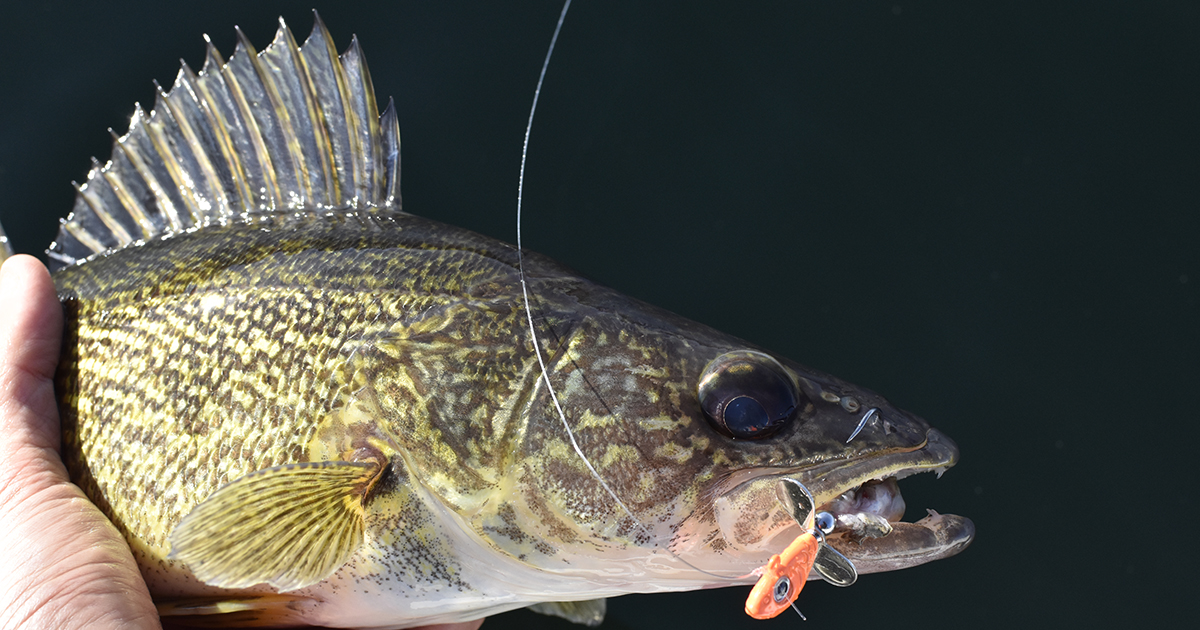
I have an old book called Why fish bite (and why they don’t). I always liked that title as this topic may be what puzzles anglers most. Why do fish suddenly turn on and off? What are the triggers that make them go or shut down? As a lifelong angler and guide, the mystery and magic of what makes fish bite or not lives rent free in my head. There are some old saws about what makes fish stop that never seem to go away. One is the impact of thunder and lightning on fish. Trout, in particular. I grew up being repeatedly told brook trout simply would not bite if the bolts were flying and thunder rolling. This thesis was tested many years ago during a canoe trip on the Albany River. Camped near a waterfall one afternoon, we found a large pod of brookies holding above it. A lightning storm approached as a few of us fished. Although the wise thing would have been to retreat to camp, the bite increased as darkness loomed. The rain started and even though we could barely see, nearly every jig or spoon cast into the churning flow of the Albany was met with a savage strike. Even my uncle Harold Ellis — who would be the first to admit he lacks fishing prowess — was smashing the trout. The lightning was getting closer, yet the brookies were unbothered. We finally got smart and left, but it had been a feverish bite in what tradition said should have been a lull. Throw out the rule book Sometimes, fish will turn on when you think it will be dead. A hot, flat, sunny summer day on a clear water lake should not be a recipe for good walleye fishing. Yet, I’ve seen walleye go on an absolute tear during a dog day many times. Even stranger is when walleye move shallow on these sunburn days, visibly cruising shorelines and reed beds. A shallow-running jerkbait or tube jig is no match for a sunny day walleye that has decided it’s time to eat. I can only hypothesize that the sun draws out crayfish, minnows, and nymphs, and the walleye ignore the rule book and head in for the buffet. As great as it is to enjoy unexpectedly awesome bites, it is more frequent to have the exact opposite scenario. The times when everything seems