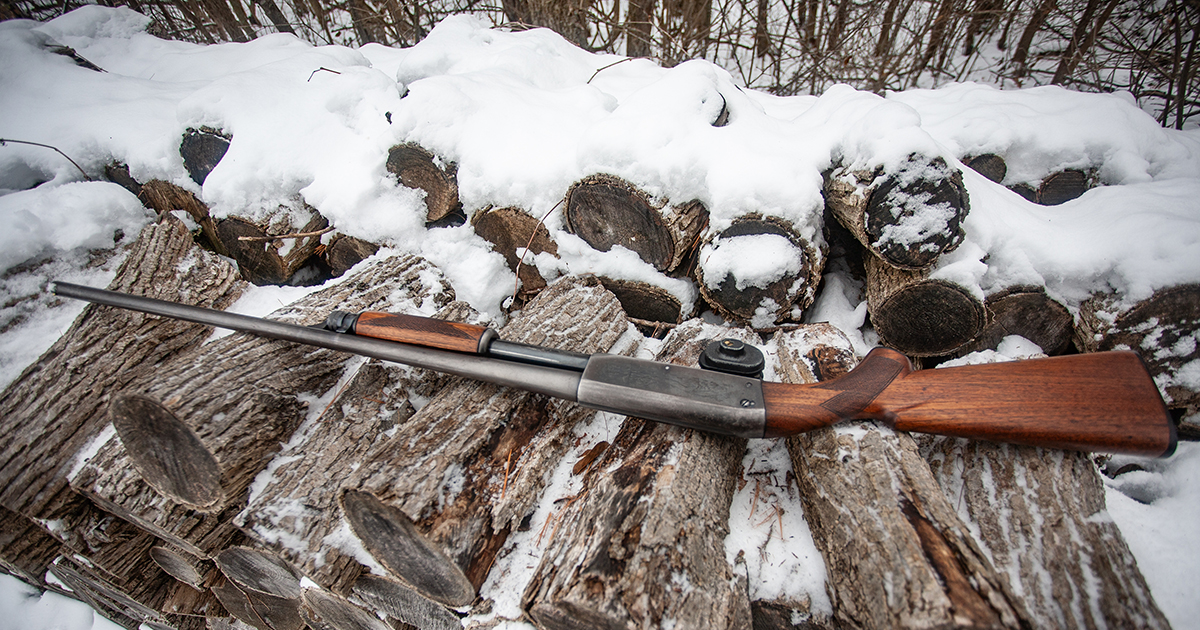
I have two bolt-action shotguns. My Stevens Model 58B .410 repeater is one of many popular entry-level bolt-action shotguns from the 1930s-1970s. It’s my go-to grouse gun on the moose hunt. My left-handed Savage 220 20-gauge slug-gun is deadly on deer. It comes from a new generation of highly accurate and specialized bolt actions. Both have earned their place in my gun safe. Military conversions Bolt-action shotguns evolved from 19th century European military gun conversions. The French began installing Tabatière breech-loading actions to transform their outdated .70 cal. smooth bore muzzle-loaders in 1864. Later they converted their Chassepot bolt-action single-shot breech loading rifles into Gras rifles in 1874. The British also converted their long-serving “Brown Bess” .75 cal. flintlock muzzle-loading smooth bores into percussion Pattern 1839 muskets. They later transformed them into Pattern 1853 Enfield muzzle-loading .577 cal. rifle-muskets. Finally, Britain created single-shot Snider- Enfield rifles by adding Snider breech-loading actions in 1866. Eventually, Belgian gunmakers acquired many outdated Tabatière and Snider conversions. They removed military markings, modified receivers, changed barrels, removed sights, and shortened gunstocks to make cheap 12-gauge “Zulu” shotguns for export. The Savage 220 20-gauge slugger After the First World War, the British easily turned some of their surplus Lee-Enfield SMLE rifles into .410 shotguns. Their Rifle Factory Ishapore in India converted others into .410 police riot-guns. The Treaty of Versailles restricted Germany’s use of its surplus firearms. So, an enterprising company — Remo-Gewehrfabrik — began converting Mauser Gewehr 98s into attractive Remo bolt-action 12-gauge shotguns in 1919. Several other companies created the GEHA brand (1920-1938). They made basic 12-, 16-, and 20-gauge bolt guns. Unlike Remo, they used more of the Gewehr 98 stock, bolt, and receiver. They also produced a higher-end Hard Hit Heart model. Many were exported to North America. (None of these military conversions should be fired without a gunsmith’s inspection.) Mossberg’s dominance If you have a bolt-action shotgun, it’s probably a Mossberg. They started with their G-4 and 70 series .410 single shots in 1932 (1932-1940). In 1933, they added the 80s series of .410 repeaters with a toploading integrated magazine (1933-1946) and the 75 series of 20-gauge single shots (1933-1940). The 85 series of 20-gauge repeaters with magazines followed (1934-1940). After the Second World War, Mossberg launched the 185 series of 20-gauge repeaters. They initially featured two screw-on chokes and later came with C-Lect-Chokes (1947-1959). Next, they added the similarly equipped