
Collaboration by Agriculture and Agri-Food Canada, University of Toronto researchers, and Ducks Unlimited Canada, (DUC) could spell bad news for phragmites, the long-established invasive grass that chokes wetlands and waterways.
The partners have released and are monitoring two moth species at select sites hoping they will damage the invasive plants.
“The two stem-boring moths – Archanara neurica and Lenisa geminipuncta are species-specific,” DUC stated in a release. “Their caterpillars only eat invasive phragmites stems, not other plant species.”
Their use, according to DUC, “is giving researchers a reason to be optimistic that phragmites have finally met their match. While the moths will not completely eradicate phragmites, they will gradually reduce the weed’s dominance on the landscape, giving native species a chance to rebound.”
The moths, which are deemed bio-control agents, have undergone extensive study and host-range testing and were approved for release in Canada by the Canadian Food Inspection Agency in 2019.
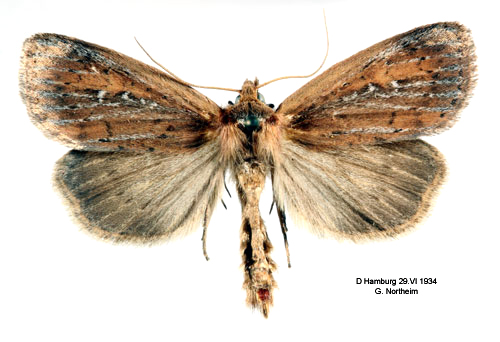
According to DUC, since 2020, approximately 21,000 moths have been released at sites from Essex County to North Bay, and east of Ottawa. Release sites are monitored each summer when assessing the impact is easier. Stems damaged by the moths have one or two boreholes, where the larvae enter and exit the stems, as well as dead or wilted plant tissue where feeding has taken place, according to DUC.
Monitoring has shown that moth populations are growing at almost all sites.
“It is hoped that these populations will continue to increase and contribute to the long-term suppression of the phragmites,” Agriculture and Agri-Food Canada Research Scientist Rob Bourchier said. “We are encouraged by the findings to date and anticipate the moths will prove successful in lessening the destructive impacts of phragmites going forward.”
Originally published in the Ontario Out of Doors 2025-2026 Hunting Annual
For more on phragmites, click here