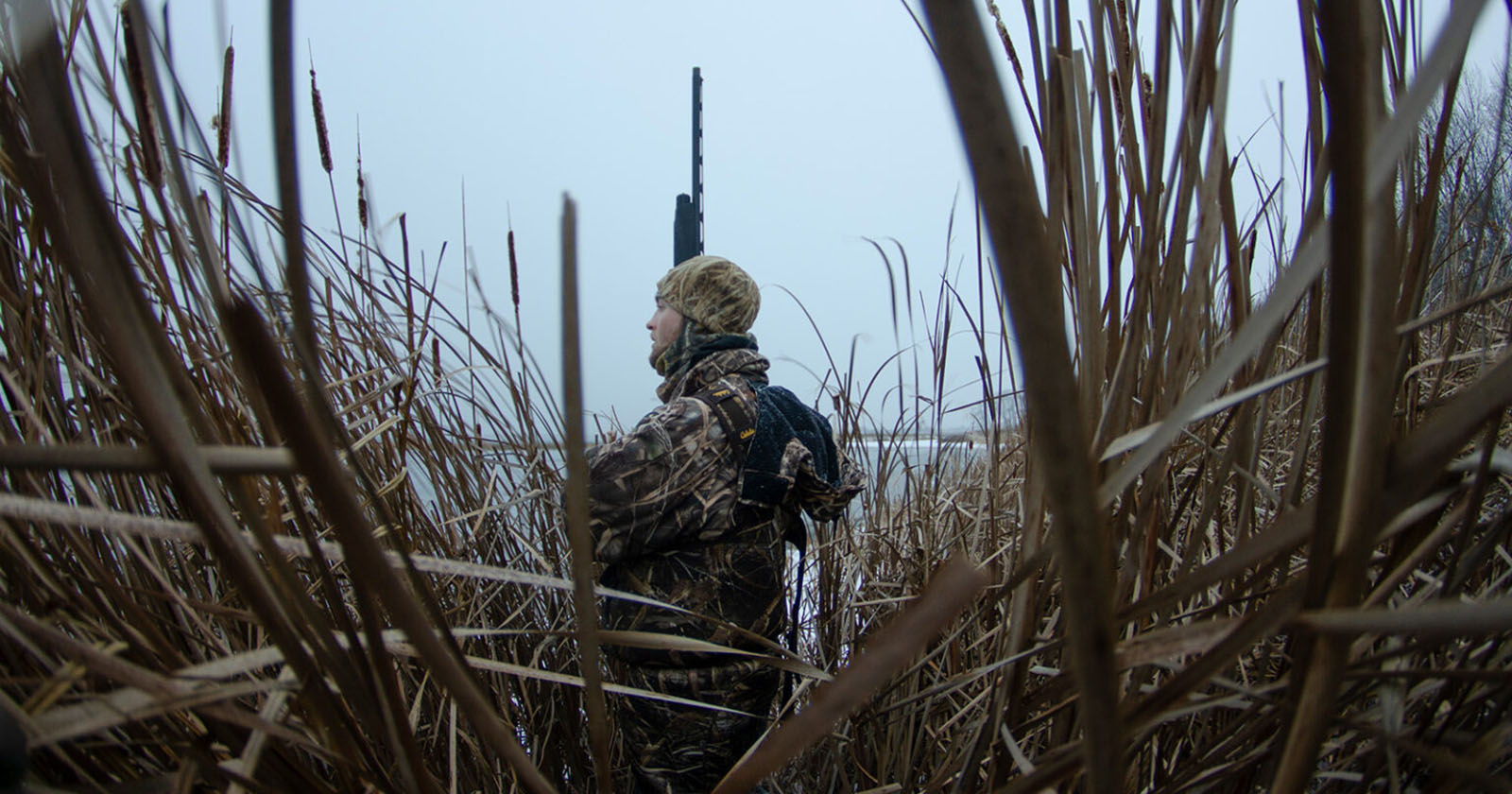
For many waterfowlers, public land is the only option to target ducks and geese. Anyone who has spent much time hunting public areas knows the frustration of days when the birds just won’t come in. Other hunters, however, consistently find success. What are their secrets? What do they do differently? We spoke with some of them to find out. Concealment is key Adam Schram is a regular hunter at the Long Point Waterfowl Unit and the director of the Long Point Waterfowlers Association. He grew up hunting here with his father and grandfather and for the past seven years, Schram has been hunting the waterfowl unit — and doing it well. Although the 40 blinds here are camouflaged with local vegetation, Schram carries an additional four or five panels of fast grass to enhance the camouflage, covering everything, including his boat. “You want it to look natural,” he said. Another experienced Long Point hunter even carries a small camouflage bag to cover the number sign in front of the blinds. Further east, Rondeau Bay Waterfowlers Association manages 30 hunting locations. Association treasurer Peter Leistra has been hunting the area 50 years. Despite a 30-minute walk and 15 to 30 minute paddle to reach the blinds, Leistra believes enough in extra camo; he carries i that distance. Calling can make or break you Calling can make the difference in success. “It’s kind of like a competition out there,” Schram said. “If you can get outcalled, you will sit and watch other hunters shoot your ducks.” His advice? Practice, practice, and practice. Hunting with Schram last fall, it’s clear that the time spent in the marsh since a young age has paid off in his calling and hunting skills. “You’ve got to sound like a duck. There’s some people out there where it sounds like a kazoo.” One of the challenges, which comes with experience, is knowing how much to call — or not call. “It all depends on the day and how educated they are,” Schram said. “Sometimes you have to call until their feet hit the water. You have to read the birds. Other days a couple of quacks will bring them in.” Leistra also believes some hunters call too much. “That doesn’t always work in a public marsh,” he said. “You have five guys calling at the same duck. It doesn’t seem to work.” On the flip side, he