
My brother-in-law of ten finds home-butchered deer remains along his rural road, near Meaford, after the deer hunt. This illegal dumping reflects poorly on hunters. Here’s what you need to know to dispose of carcasses properly.
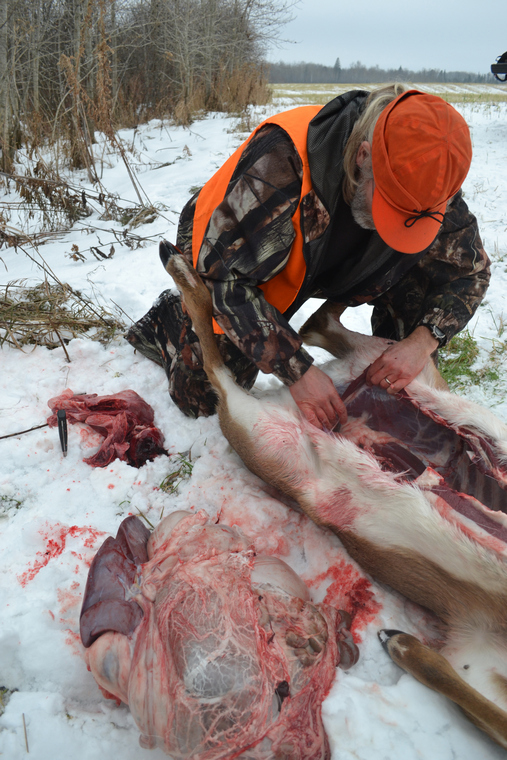
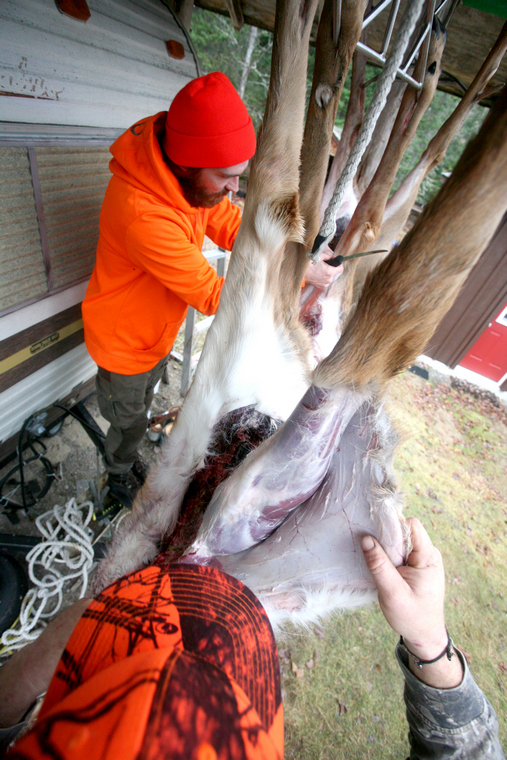
After field dressing an animal, hunters may leave leftover parts at the kill site, Ministry of Natural Resources Provincial Enforcement Specialist William Johnson points out. This is a way for hunters to give back. A trail camera placed over the gut pile will reveal scavengers of all shapes and sizes. Within days, only a stain will remain.
Carcasses should never be left in roadside ditches where they can contaminate water. These also draw scavengers closer to the road, where coyotes and wolves can come in contact with pets, people, and vehicles.
Your municipality’s waste management system may provide the easiest and cheapest solution. Contact your transfer stations and landfills first, however, because not all accept animal remains. Barry Campbell, manager of Peterborough’s Organic Waste Operations, contends that carcasses are not green waste or kitchen organics. To avoid the “Yuck factor,” don’t send them to compost or recycling. He considers smaller animals, like birds or rabbits, household waste suitable for curbside pick-up. They should be double bagged and frozen until garbage day.
Carcasses can be properly deposited on Crown land or on private property with permission. Leave the remains deep in the bush, but still accessible to scavengers. Avoid discarding near trails, streams, or bodies of water.
Illegal dumping is when someone dumps waste materials (including carcasses) on municipal, crown, or private property without permission. For municipal properties, that includes the entire road right of way/ditches/boulevards, parks, alleyways, parking lots, and facilities. If you return a carcass to the woods, take it far from trails where dogs walkers could encounter it.
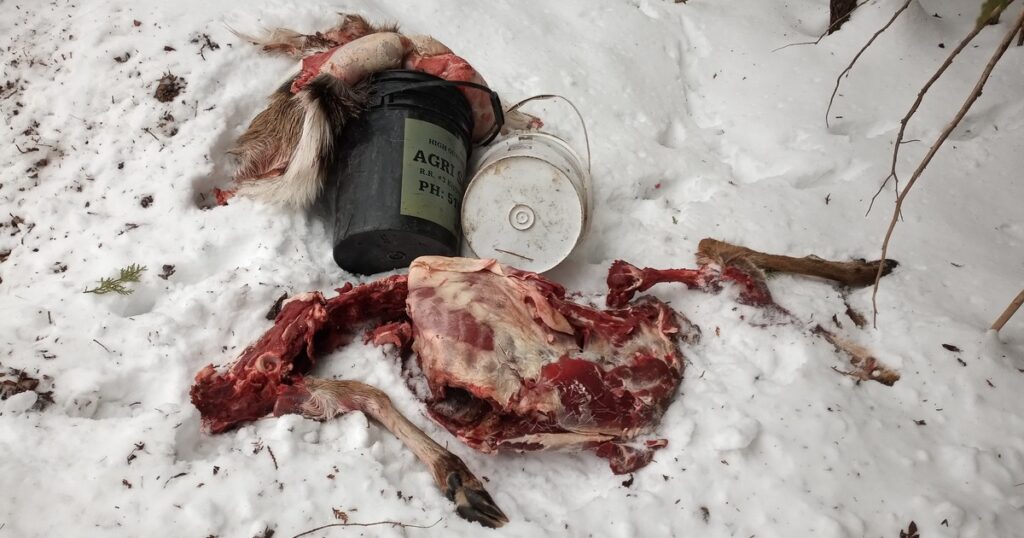
Dumping is not a crime within the Criminal Code, however, most municipalities have bylaws to prohibit it. Fines range from $100 to more than $10,000. Illegal dumping on Crown land violates the Ontario Public Lands Act, with comparable penalties.
Ideally, hunters should return the remains to the harvest site. Studies show that carcasses left on the ground positively affect the environment throughout the food chain. The scraps attract more insects and significantly increase plant growth.
Ontario’s Hat for Hides program provided a partial solution for almost 50 years. The Ministry of Natural Resources encouraged hunters to trade deer and moose hides for orange hats with dated crests. The hides were distributed to Indigenous people to make artisan crafts. At its peak, 46 depots helped redistribute almost 40,000 hides. In 2013, the Ministry’s Peterborough partner, BRT Provisioners, took over. The closure of Barrie Hides Inc. in 2019, however, as well as the pandemic’s impact on powwows, and the availability of cheaper hides from China, have killed the program.
Originally published in Ontario OUT of DOORS’ 2024-2025 Hunting Annual