
The work begins right after an animal is down. Field dress it and open the body cavity to speed cooling and prevent spoilage as soon as possible. This means not following the advice of anyone who suggests leaving the animal until the next morning. It will spoil, even if there is snow on the round and the temperature is -10˚C.
After harvest, ensuring proper cooling and temperature is paramount. Carcasses must be cooled to 4˚ C within eight hours and maintained between 0 and 4˚ C.
After recovery and photos, move the animal to as clean an area as you can — get it on its back to make the work easier. Open it by cutting upwards through the hide, cutting less hair and keeping the animal cleaner. Split down through the hips to the pelvic bone. If possible, open the chest cavity by cutting the breastbone.
If you have to drag the carcass through dirt or water, this can be done after getting to the trailer or truck. Cut the diaphragm and pull the lungs out. Next, cut around the anus, remembering to leave the vulva attached for a cow moose and the male parts attached for a bull. Tie a string around the anus and pull it back through the pelvic bone into the body cavity. Pull as much of the intestine out by carefully cutting along the backbone, making sure not to cut the intestine. Lay the carcass on its side and remove the intestines and stomach, trying not to cut either.
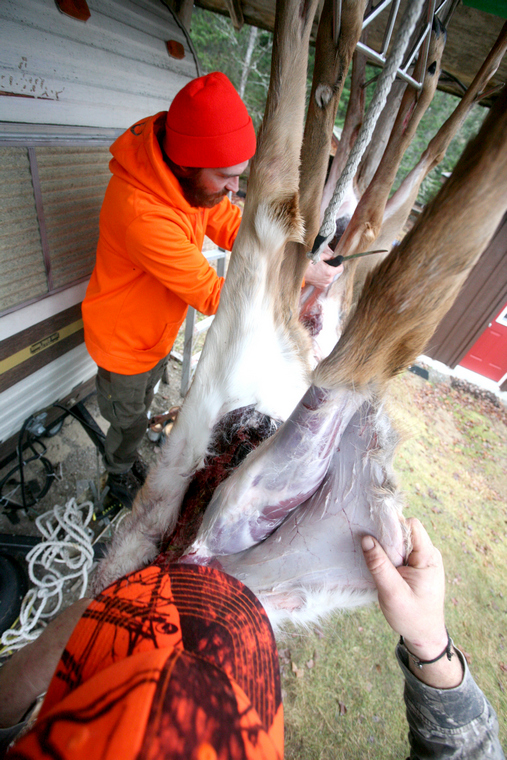
This process is easier if you have a hoist and gambrel and can be done as the carcass is hanged. When the animal is eviscerated, prop the cavity open to start cooling and hang it ASAP. If you can’t, get the carcass into a cooler. If the temperature is not decreasing to 4˚ C, pack it with ice — use blocks instead of cubes, as they last longer.
A garage, shed, or barn may feel cool, but make sure it is no more than 4˚ C. A common mistake is to hang the animal by the head without opening the chest cavity and removing the esophagus. This causes a tent where the heat can’t escape. If you can keep the carcass clean, skin it to speed cooling. Moose quarters should also not be stacked when warm unless they can be hung up in short order.
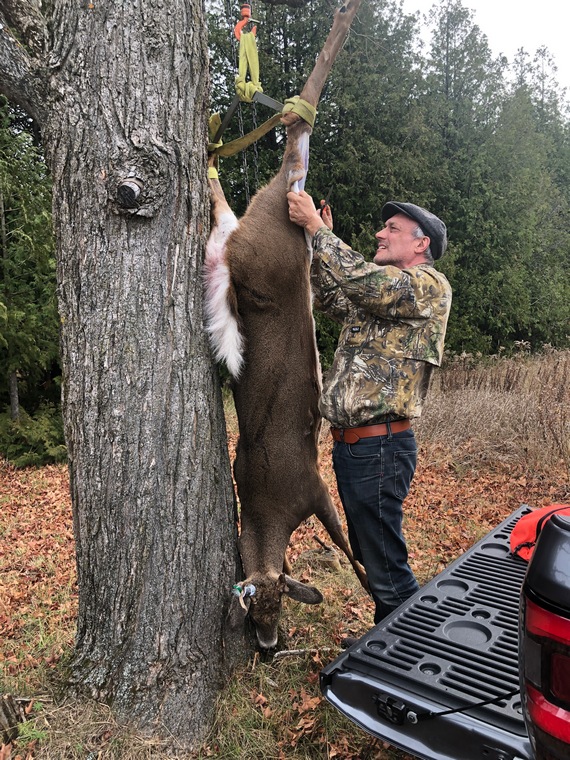
If you have a long trip home, the carcass should be packed with ice as the sun will heat it back up — especially in a closed trailer or truck box with a cap.
Treat your kill with the same respect that you would expect butchers to show, or if you were taking a prime rib or tenderloin hunting with you. You would not leave it hanging on a pole in the heat.
Originally published in Ontario OUT of DOORS’ 2024-2025 Hunting Annual