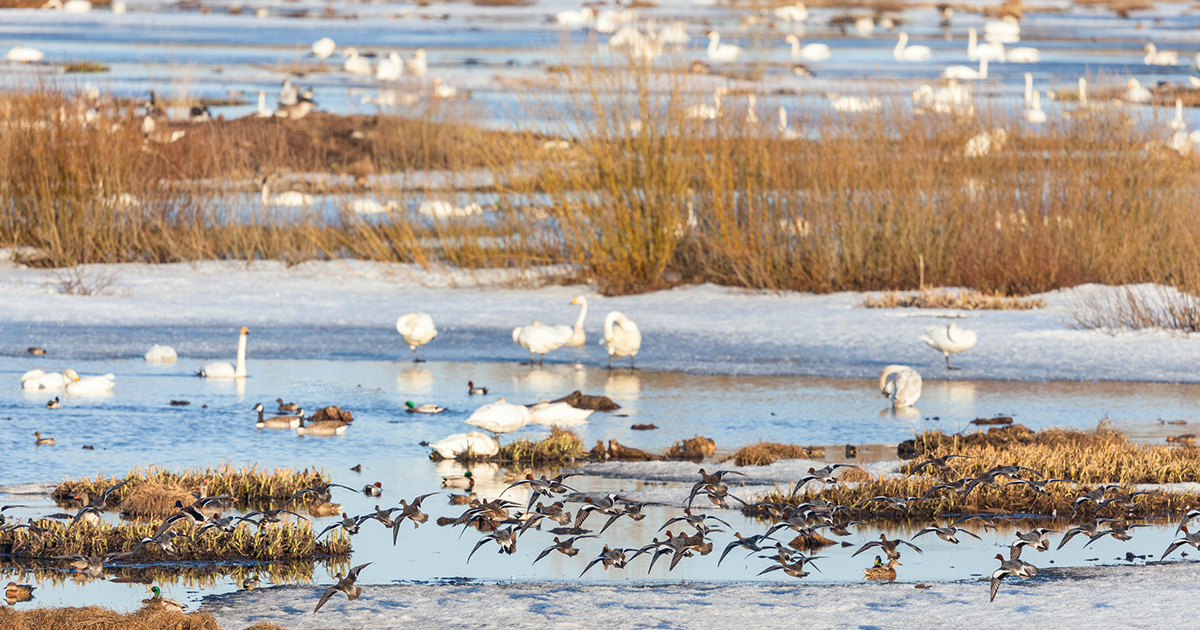
From the top of the flyway to its southernmost point, waterfowl face roughly 175 days of continuous hunting pressure during their migration — starting on September 1 and stretching into January. Here in Ontario, we’re allotted the maximum 107 days of hunting for both ducks and geese. While we’re fortunate to pursue birds that often experience less pressure, there’s no denying that ducks and geese quickly wise up to even our most glorious attempts to bring them down. Add to that the fact that so many decoy spreads begin to look alike, and it’s no surprise these birds can spot the difference between genuine flocks and our neatly arranged plastic and wooden fakes. That’s why it pays to break from the mold. To help your spread stand out and fill your straps, here are a few tricks I’ve learned. Robo duck tweaks get one high I can’t exactly explain why a robo duck spinning 15 feet in the air works so well to draw in birds — but it absolutely does. I might be letting the cat out of the bag here, but a telescoping robo pole can be pure magic for a flock that’s hanging just out of range. By placing a tall robo 100 yards or more outside your main spread — positioned between you and the birds — you create a powerful visual cue that draws their attention. More often than not, they’ll drift over to investigate the elevated spinner, then quickly commit to your full spread. I’ve used this trick with unbelievable success. It can take you from simply bird watching to lights-out shooting in no time. Custom-length poles In my experience, there isn’t an off-the-shelf robo duck pole that truly meets the demands of serious waterfowlers. For many overwater set-ups, standard poles aren’t even long enough. One of the most useful hacks I’ve picked up in more than 20 years of guiding duck hunters is to custom-build your poles at varying lengths. When placed strategically throughout your spread, different pole heights create a more realistic illusion of ducks preparing to land, as opposed to a uniform cluster of identical decoys. A better base For added stability, add trident-style bases — rather than a single post — using medium-light half-inch steel or small rebar. You can likely find a local fabricator to make exactly what you need at a reasonable cost. Just bring the measurements of