When I was a kid learning how to hunt grouse with Grandpa, one of the things he taught me was to gut them promptly to keep them tasty.
When I was a kid learning how to hunt grouse with Grandpa, one of the biggest secrets he taught me was to gut them promptly to keep them tasty. This is especially important on warm days, or when the bird has been gut-shot, where leakage from the intestines could contaminate meat.
Here are two methods for field dressing a grouse.
Whole birds
Many of my favourite recipes, such as stuffed grouse or spit-roasted grouse, call for a whole bird. It also makes a beautiful platter presentation and allows the hunter to take pride in their marksmanship, when there’s little or no shot damage.
Another reason is that my grandparents taught me to make use of every edible part of the game I harvested. On a grouse, that includes the legs and giblets, which are often left behind when a bird is simply breasted.
Pluck the body feathers. This is much easier while the bird is still warm. The skin tears easily so peel that off as well.
Next, pull or snip off the head to allow the bird to bleed out. Regulations require hunters to leave at least one wing attached for species identification until its final place of preparation.
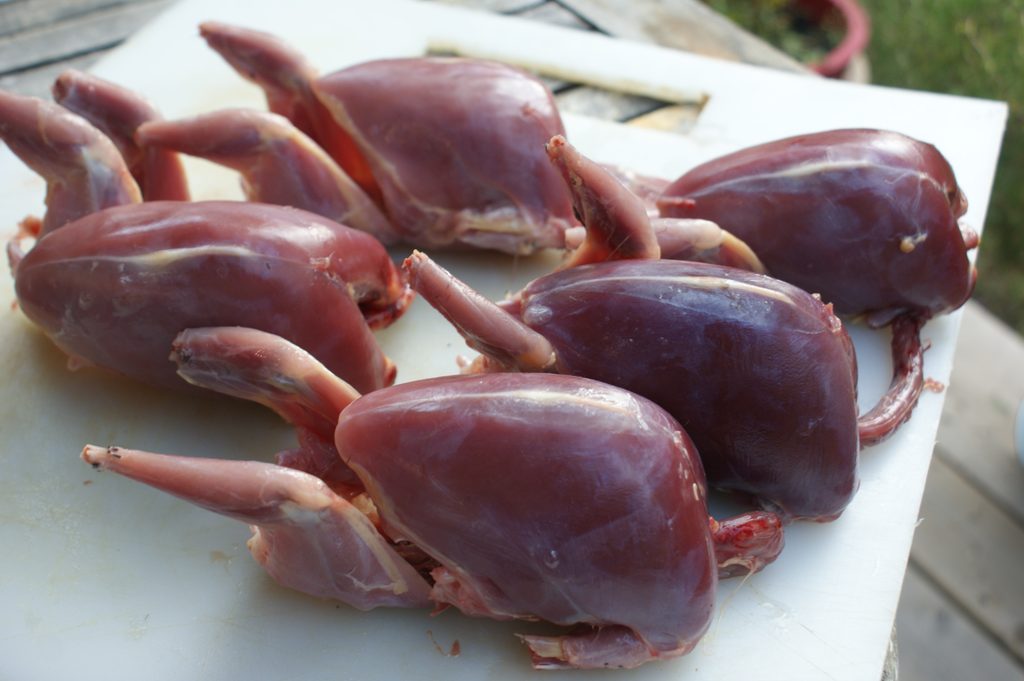
With feathers and skin removed, you’ll clearly see the full breast of the grouse (see photo below). At the bottom of the breast is a thin membrane connecting the breast to the back of the bird and concealing the body cavity. Hold the bird firmly by the back with one hand. With the other, hook your thumb under the breastbone and pull it up and away from the back, tearing the membrane that joins the two sections.
With the cavity fully open, reach in with two fingers, grasp the heart area, and gently draw out the entrails. Wipe out any remaining blood with paper towel or moss. Keep the heart, liver, and gizzard.
Remove the wings at the shoulder joints, scrape or thumb the lungs away from the backbone, inspect the cavity for any stray pellets, and trim away any shot-damaged meat. Wash the bird inside and out with cold water, then pat it dry.
Wash the giblets well. Trim the connective tissue from the gizzard, slice it open, and rinse out the grit. These are delicious sautéed in butter, but if you don’t care for them, they make a fine reward for a faithful bird dog.
Breasting a grouse
I use this method when I’ve made a poor shot and the bird is badly damaged.
Lay the bird on the ground, on its back. Tuck the head beneath the body, and spread the wings wide Step onto each wing as close to the body as possible. Grasp a leg in each hand and pull upward with a steady, firm motion until the bird separates into two sections. In your hands will be the fully feathered back of the grouse with the entrails still attached. On the ground beneath your boots will remain the wings and breast.
Peel away remaining feathers from the breast, and the meat is ready to bag. If the legs aren’t badly damaged, retrieve those as well before discarding the carcass.
Whole birdsready for the pan
How to break it all down
Using kitchen shears, cut up each side of the rib cage to free the breast from the backbone.
To remove the breast fillets, place a sharp fillet knife against one side of the keel bone—the prominent ridge running down the centre of the breast—and, keeping the blade tight against the bone, slice toward the tail to free the meat. Repeat on the opposite side. This yields two boneless breast fillets. You’ll notice that each breast half has a small strip of exceptionally tender meat tucked beneath it. These are the grouse tenderloins.
Don’t discard the remaining bones. The breastbone, backbone, neck, and legs make excellent stock for soups, gravies, and sauces.
Linda Gabris grew up in Muskoka, Ontario and makes her home today in BC. She loves fishing, hunting, foraging edible wilds and campfire cooking which are her favorite topics for sharing in articles, columns and books. Her latest regional best-seller, Wild Harvest BC, won 1st place in the 2025 Pomac National Communications Book Award.
Linda Gabris grew up in Muskoka, Ontario and makes her home today in BC. She loves fishing, hunting, foraging edible wilds and campfire cooking which are her favorite topics for sharing in articles, columns and books. Her latest regional best-seller, Wild Harvest BC, won 1st place in the 2025 Pomac National Communications Book Award.
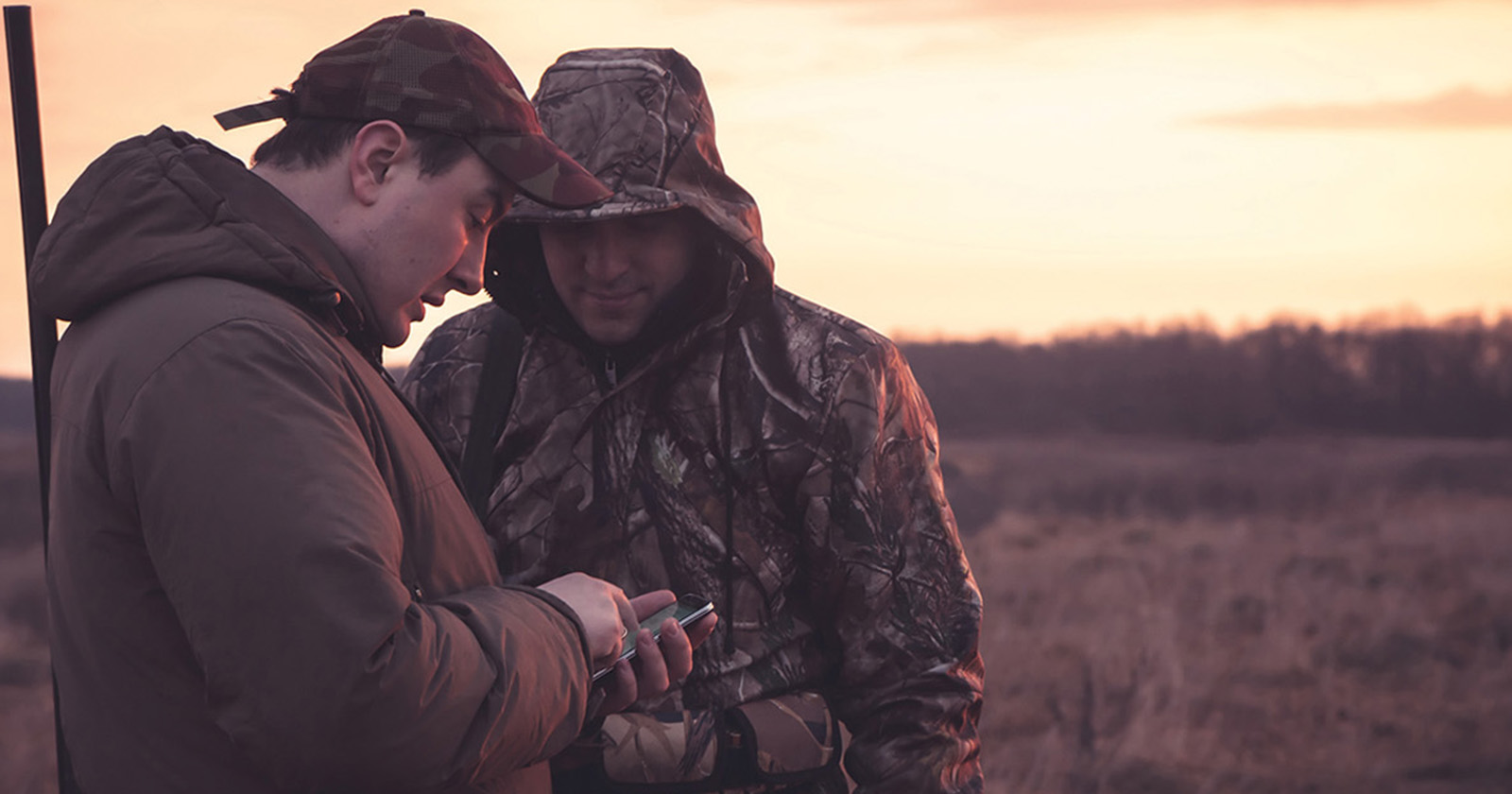
Preparation has always been the foundation of a safe, successful hunt. While technology should never replace robust trip planning and safe hunting practices, it serves as an invaluable backup when the unexpected happens.