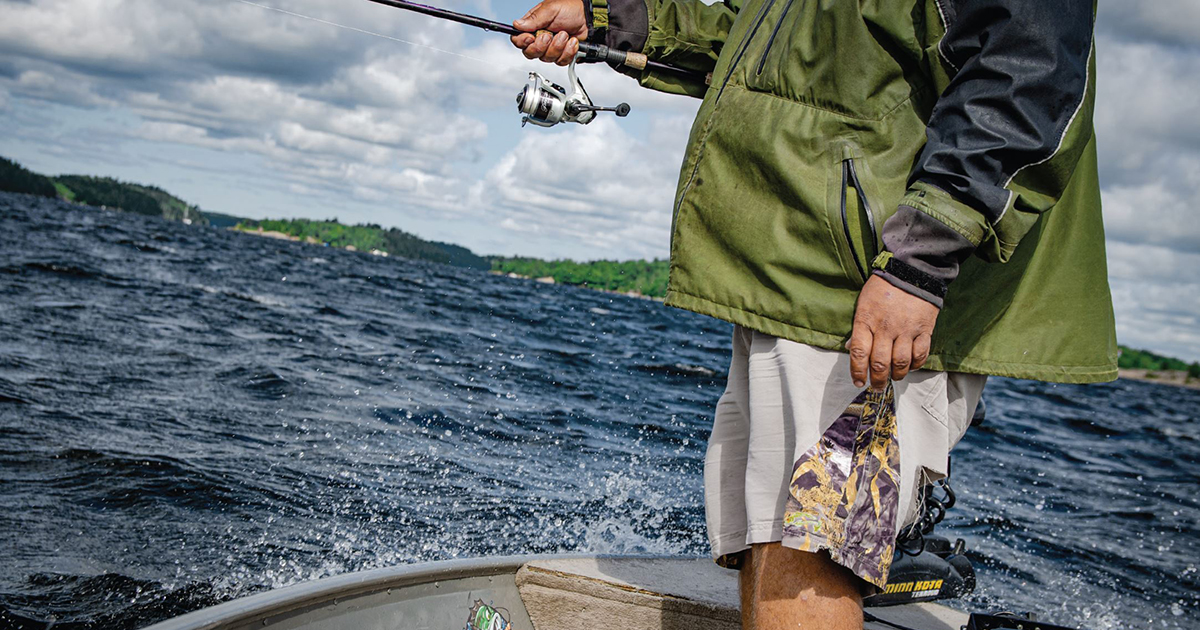
If chains are only as strong as their weakest links, it could be said that anglers are only as good as their hook sets. While aggressive fish may be hooked automatically, a bad hook-set can lead to fish escaping during the fight. Here are some pointers on driving hooks home, using popular presentations for a range of species. The three rules: Always be ready to set the hook. Yes, we may all get distracted at times, but even when daydreaming, an angler who is positioned properly is better able to react quickly upon detecting a bite. Pick a side. When casting, most prefer setting the hook by swinging the rod to a certain side. I hold a rod in my right (dominant) hand and set left. When fishing with others, I stand to their left so I have room to set without bumping them. Keep it natural and fluid. If the hook-set feels awkward, you likely need to revisit your mechanics and make some adjustments. Finesse set with light-wire hooks When finesse fishing, the key steps are: • letting the fish take the bait• reeling in slack, and• using a sweeping motion to load the spinning rod to bury the thin-wire hook. Jerky movements and excessive force can cause leader knots to fail, hook gaps to open, and other mishaps. Bass power set Multi-species expert and G. Loomis pro, Steve Barnett of Ottawa, visualizes standing in a box to keep his body in position for hook-sets and fighting fish. It’s a good illustration of Rule 1. “I keep my feet shoulder-width apart and my arms close and compact, like before I take a baseball swing,” he said. “But, when I set, instead of stepping forward like in baseball, I take a step back, pull the rod up, and reel into my chest, and let the rod do the work to drive the hooks home.” Barnett keeps his hands and rod butt close to his core. This gives him the most power, balance, and control. Avoid hands over the shoulders or out to the side, as these positions work against the angler. Jerky movements and excessive force can cause leader knots to fail, hook gaps to open, and other mishaps. Sweep the rod to about the 11 o’clock position. Your rod should stay between the angles shown when fishing vertically. Drop-shotters tend to hold the rod higher. You shouldn’t need to