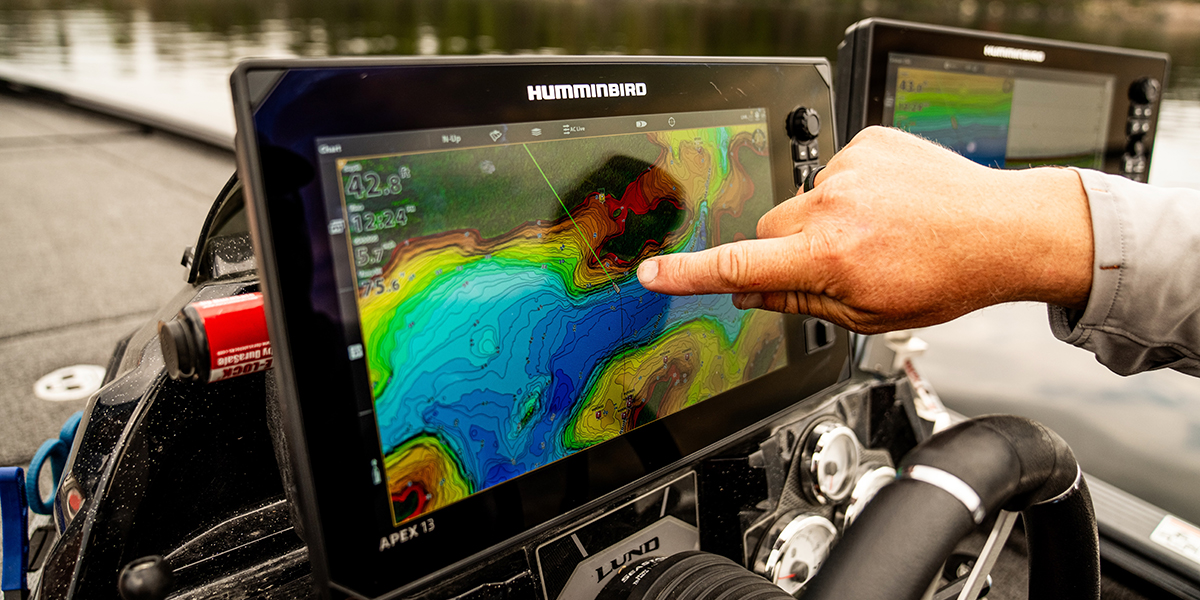
In the pre-dawn hours of a cold January morning, I shuffled through the snow in the driveway to warm up the truck. It didn’t start easily, even with the block heater plugged in. I remember thinking to myself, as I glanced at the outside thermometer and saw it read -28˚C, “Should I be doing this?” From past experiences, I knew getting out early was the best bet for good walleye fishing, so I erased any thoughts of going back to bed. An hour later, the familiar sound of a two-stroke gas auger coming to life interrupted the quiet sunrise on northwestern Ontario’s Minnitaki Lake. It was too cold to run-and-gun, so I drilled a couple of holes in front of my flip-over ice hut and hoped that I landed on some fish. I climbed inside the hut, fired up the propane heater, and dropped my transducer down the hole. With the flick of a switch, the flasher whirled to life and colours lit up the screen with two distinct marks just off bottom. “Bingo!” I said aloud, having a good idea of what was going to happen. Downsizing delivers The next two hours can best be described as what ice-fishing dreams are made of: hungry and aggressive walleye smashing lures. Watching the flasher screen, at times I could see two fish rising up to greet my bait, before feeling the telltale thump of a solid hit. The bite was on. No matter what I put in front of the fish, they ate it, and I hadn’t even opened up my bag of minnows. As quickly as it all began, though, it ended. They stopped as if someone had hit an off switch. I kept marking fish, but they wouldn’t bite. Live bait didn’t help, either. The marks on the flasher would inspect my offerings and simply sink back to bottom. No question, I’d already had a great day and could have packed up then and there, but part of me wanted to solve this puzzle. I’d caught a lot of fish that morning on a large horizontal jigging bait. I had the same one in my panfish box, except it was the smallest size made. I tied it on, sent it toward bottom, and watched the flasher screen. Just as before, a thick red mark appeared below the bait. This time, however, the mark didn’t sink back to bottom; it