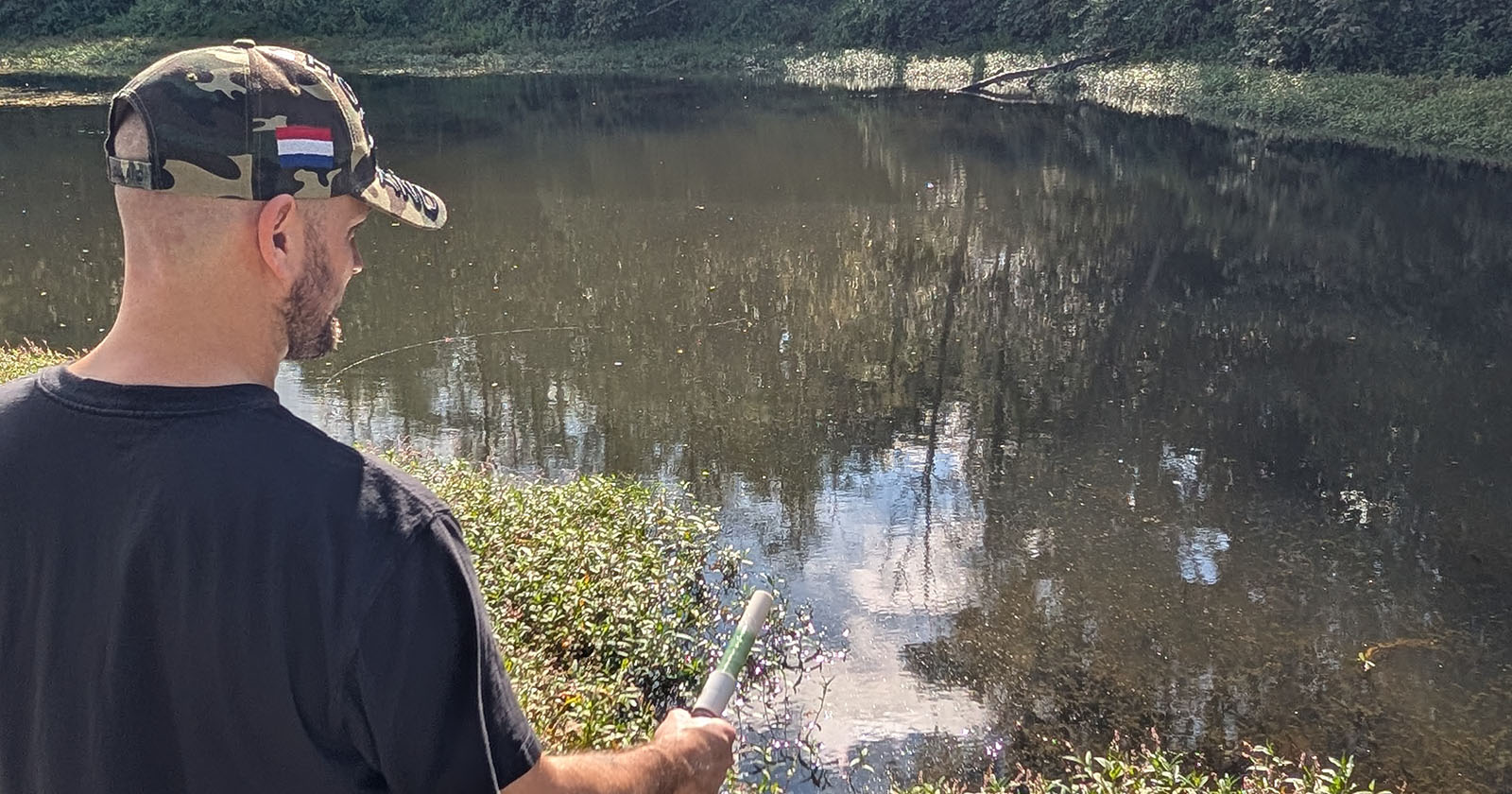
One rule amongst bass anglers is that no one talks about bucktail jigs. They’re a mainstay for walleye, but haven’t been considered a bass bait — until now. A long time ago someone had the brilliant idea of tying tufts of deer hair to a lead head jig. The original bucktail style is still the most popular, but variations are common. With real or synthetic deer hair as the base, many jigs have accents of tinsel, marabou, mylar, feathers, and even a few strands of thin rubber. Bucktails are easy to fish, nearly indestructible, and bass eat them up. Rippin' the weeds Typically, bucktails don’t have a weedguard, yet they zip through heavy weeds with ease. With a simple snap of the wrist or jolt of the elbow, a bucktail bolts upward through the water. Snap jigging or ripping lets anglers fish grass beds quickly. This aggressive retrieve triggers bass, regardless of their mood. “Big” Jim McLaughlin of Sealy Bay has been tying and selling bucktail jigs for decades. “Hair is much more durable than any plastic and will stand up to really aggressive rip jigging where the jig moves four to five feet at a time and explodes out of the weeds,” he explains. “When the bass bite it they get nothing but hook. They’re perfect lures.” To master this presentation, you need a medium-heavy or heavy 6', 6″ to 7' spinning rod paired with a reel full of braided line between 20- and 40-pound test. No-stretch line and a stiff rod blank ensure the jig slices weedy tangles. King's words OOD contributor and bucktail believer Lonnie King always adds a homemade 40-pound fluorocarbon leader to save his jigs from toothy pike. He promises catch rates won’t suffer. Another slick trick he employs is to use only a split ring, not a snap, to attach his jig, making it more weedless. A 3⁄8 ounce jig is the most versatile choice. Anything lighter doesn’t have the heft to crash through weeds. Focus on jigs that have a ball- or banana-shaped head with the line tie near the nose and mounted smoothly against the lead. Avoid jigs with jagged edges or line ties that protrude too high; they’ll catch more weeds than fish. Ripping is ideal for fishing weed flats and edges from five feet deep and beyond. Smallmouth and largemouth love them equally. With the correct gear, success is a