
No camp is complete without a handy axe. These time-tested cutting tools have evolved into many different configurations, styles, and uses. Sure, processing firewood with a mechanical wood splitter is faster and easier on the body; but there’s something about swinging an axe that gets the juices flowing.
Here are the three axe types that cover the many tasks one could be faced with at the camp or cottage, and how to care for them.
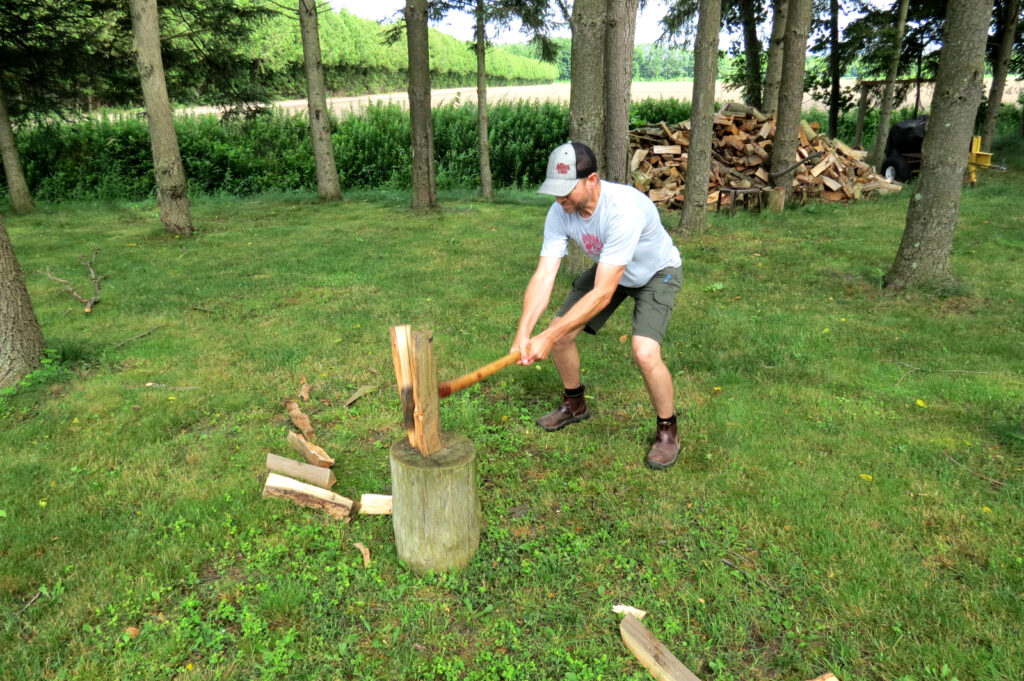
This is the heavy-duty workhorse. Splitting mauls come in various head weights and handle lengths, but a mid-size model is often all that is needed for most large chopping chores at the hunt camp. Splitting plus-size wood rounds is a great workout. But for some of us, it can quickly result in fatigue and sore muscles. Depending on the size and species of material you’re processing, you may not need the biggest maul out there. The length of these tools allows for a fluid overhead swing and the weight of the head contacts the material with authority. These axes are ideal for large pieces of hardwood (oak, cherry, ash) for the campsite bonfire or larger wood stove in the cabin.
This is the do-it-all wood wonder and is as much at home in the campsite as it is in the woods. Splitting smaller-sized firewood and clearing small trees are this tool’s specialty. This is a great option to have at the ready in your truck, ATV, or snowmobile. These axes are equipped with a longer handle and slightly flared head which gives them the extra swing and punch if needed. Some models (such as the one pictured) are particularly ideal for hammering wedges when felling larger trees during chainsaw use.
No camp axe lineup is complete without this little gem. These axes are ideal for inside the hot tent when chopping up kindling for the woodstove. They are also useful for many other applications such as processing game, hammering tent stakes, and cutting rope. A great option for survival situations, these tools are compact and lightweight, which makes them ideal for packing along on day trips and backcountry pursuits.
Like all cutting implements, a sharp tool is a safer tool. Use a file or sharpening stone to maintain a razor-sharp edge to ensure work efficiency and reduce fatigue.
The axe head should be kept oiled to protect it from the elements. A light coating of gun oil will work. For wooden handles, linseed oil will maintain look and lifespan by sealing the grain to keep moisture at bay. Apply beeswax to the exposed grain at the top and bottom of your handle to prevent swelling and shrinkage.
Originally published in the Fall 2024 issue of Ontario OUT of DOORS