I was bowhunting with friend and bear outfitter, Romu, of Boundary Waters Guide Service on the Victoria Day weekend in Thunder Bay.
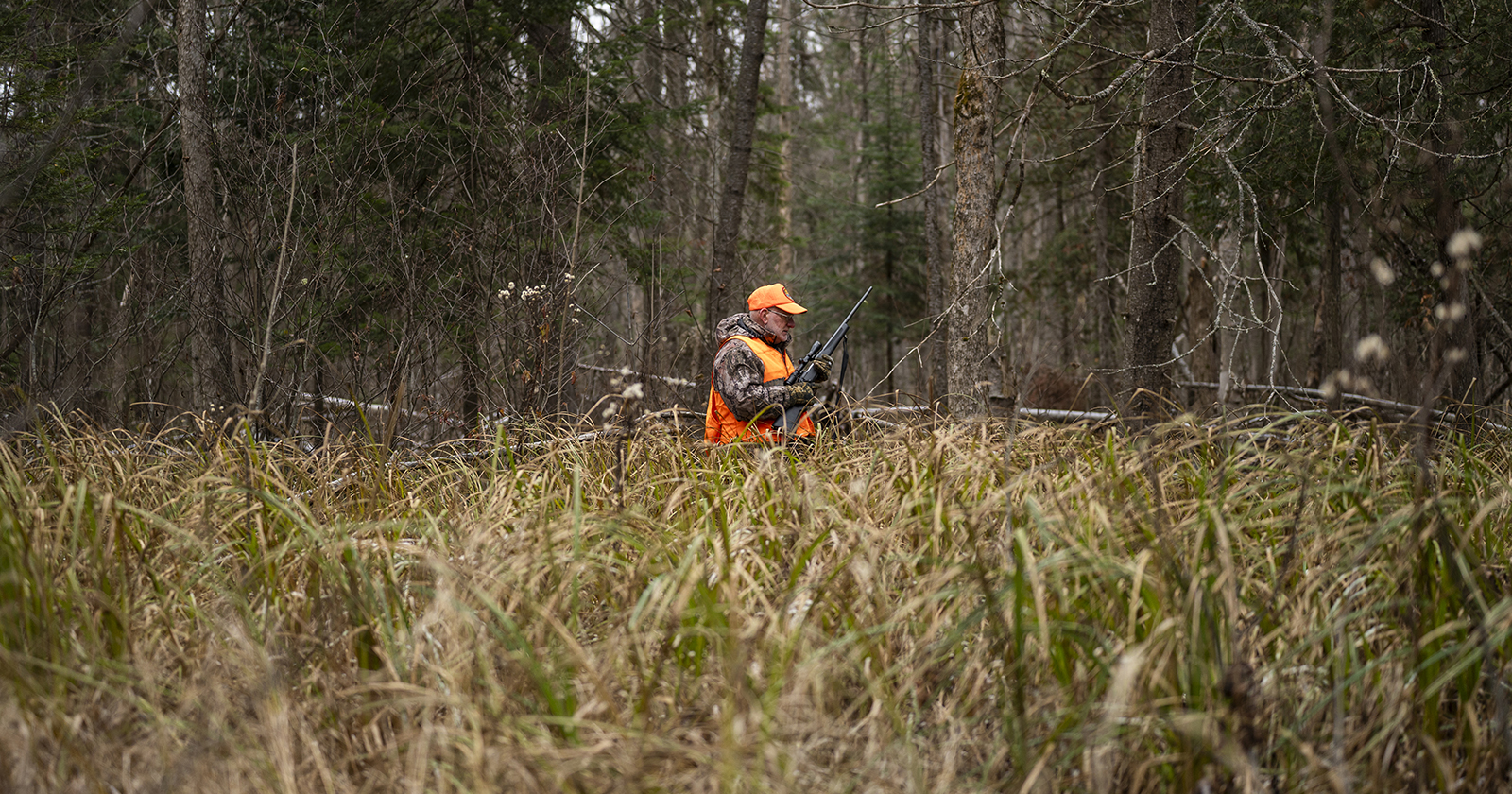
“That ought to work,” said Andrew Romu as we stepped back to admire the impromptu brush blind. We’d made a last-minute adjustment to our hunting plans and switched to a new bait site that had seen a serious increase in bear activity. No tree stand had been installed yet, so we decided to hunt from the ground, and had built a rough shelter 18 yards from the bait.
I was bowhunting with friend and bear outfitter, Romu, of Boundary Waters Guide Service on the Victoria Day weekend. Romu is a Bear Management Area operator south of Thunder Bay, just north of the Minnesota border, who offers guided hunts for bear and wolf, and fishing trips. He operates out of a classic log cabin that was built by his father in 1974 from white pine he harvested and sawed. This was once the family homestead, and is now the hunt camp, offering lodging and excellent home-cooked fare for up to seven guests. With some modern additions and amenities, it’s a great setting for a hunt.
Back on stand
On our first afternoon, we headed out to check baits and found good bear activity at every stand. The snow had recently disappeared and bears were hungry, showing up in daylight at most sites. Romu says activity traditionally ramps up in early June, so for late May things looked promising.
Back at camp, we fired up the sauna and got cleaned up and scent-free for the evening hunt. We took the truck as far as we could, unloaded the ATV for the rough stuff, and walked in the last few hundred yards.
The bait site was tucked into a planted pine plantation and the trail camera revealed that an impressively large bear had frequented it. He’d just recently shown up, and wasn’t a regular daylight visitor, but it was worth a shot. We spent the evening in the plantation, and although we didn’t see a bear, it was great to be in the stand with bow in hand.
The next morning, we decided to try another location that offered a tree stand tucked within a mature cedar forest. The knotted roots of the old cedars ran across a thick carpet of moss, with little undergrowth to obscure our view. It was a great-looking spot backed up by trail camera pics of bear activity. We sat until the bugs chased us out of the stand.
Makeshift ground blind
Later that morning, with temperatures warming and the sun shining, we ventured out again to check baits and pick a different location for our evening hunt. This time, we settled on the new site that had been hammered by multiple bears, but didn’t have a tree stand.
Wanting to limit disturbance at the site, we set to work cutting small spruce and pine boughs, and created a three-sided brush wall with a small shooting hole. Satisfied that it would conceal us from a bear, we headed back to the cabin to fill our bellies and prepare for the hunt.
By mid-afternoon we were creeping back into our makeshift blind. It was immediately apparent that something had recently visited, and sure enough, a quick check of the trail camera revealed a bear had just been at the bait, likely about the same time we’d begun our walk in.
With optimism high, we settled in behind our wall of brush.
Short wait
“Bear,” Romu whispered as he looked over my shoulder at the trail beyond our set-up. But as quickly as it appeared it vanished, melting back into the boreal forest. I didn’t move, hoping it would return. And it wasn’t long before I could see a black shape approaching through the underbrush. The bear cautiously made its way out and started feeding, laying down under the bait barrel, forcing me to settle my nerves and wait for a shot. For the next 15 minutes, we watched the bruin feed and mill about, never presenting a shot. He was standing, laying, or moving, and never stood broadside. It was a great looking bear, with a sleek and silky jet-black coat.
When the bear climbed up onto the logs that were holding the bait barrels, I drew, and waited at full draw for over a minute. Eventually, he stood broadside and I released the arrow. It hit home and he barrelled off into the timber, shaking the trees as he collapsed with a crash in view of the stand. After giving him some time, we emerged from the blind to claim my spring bear.
With plenty of daylight left, we loaded it onto the ATV and headed back to camp, where we dressed and skinned the animal before starting dinner and heating up the sauna.
It was my first time harvesting a spring bear, and after a long cold winter it sure felt great to get back in the stand.
Trip details
Cost: Six-day hunt with lodging, meals, and transportation to baited stand $2,250.
Getting there: Boundary Waters Guide Service is one hour southwest of Thunder Bay via Hwy. 61 and Hwy 593.
Accommodations: Drive-to main lodge with propane fridge, stove, hot water, woodstove, and sauna.
Tom Armstrong worked with the MNRF before moving to law enforcement. He loves all things hunting and fishing with his family. Reach Tom at: mail@oodmag.com
Tom Armstrong worked with the MNRF before moving to law enforcement. He loves all things hunting and fishing with his family. Reach Tom at: mail@oodmag.com