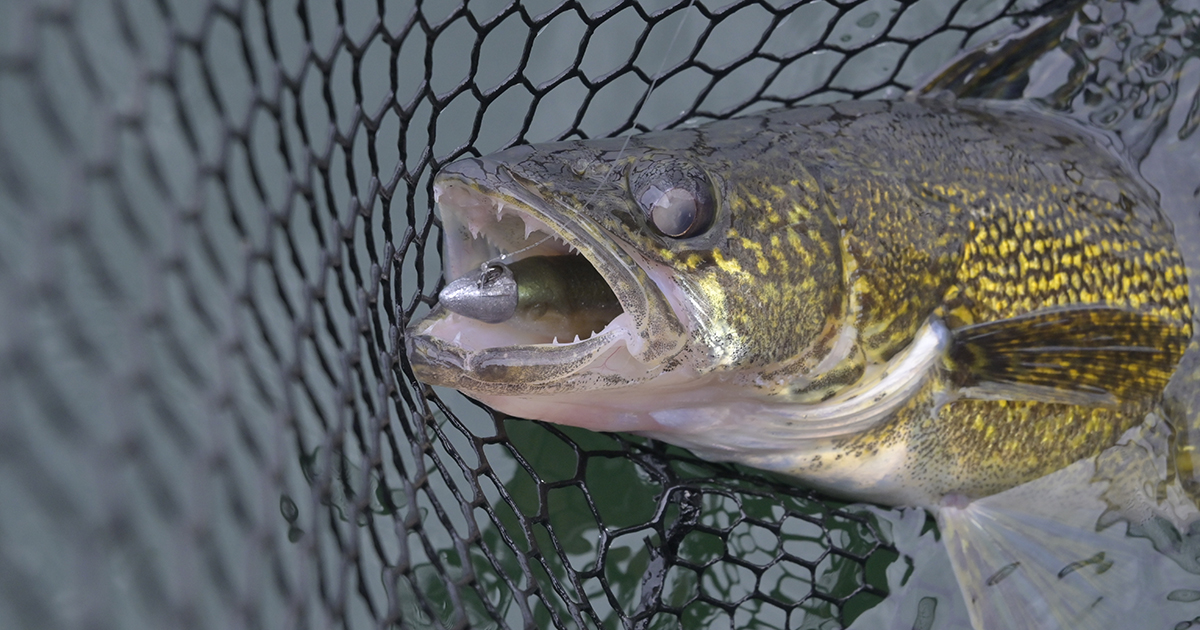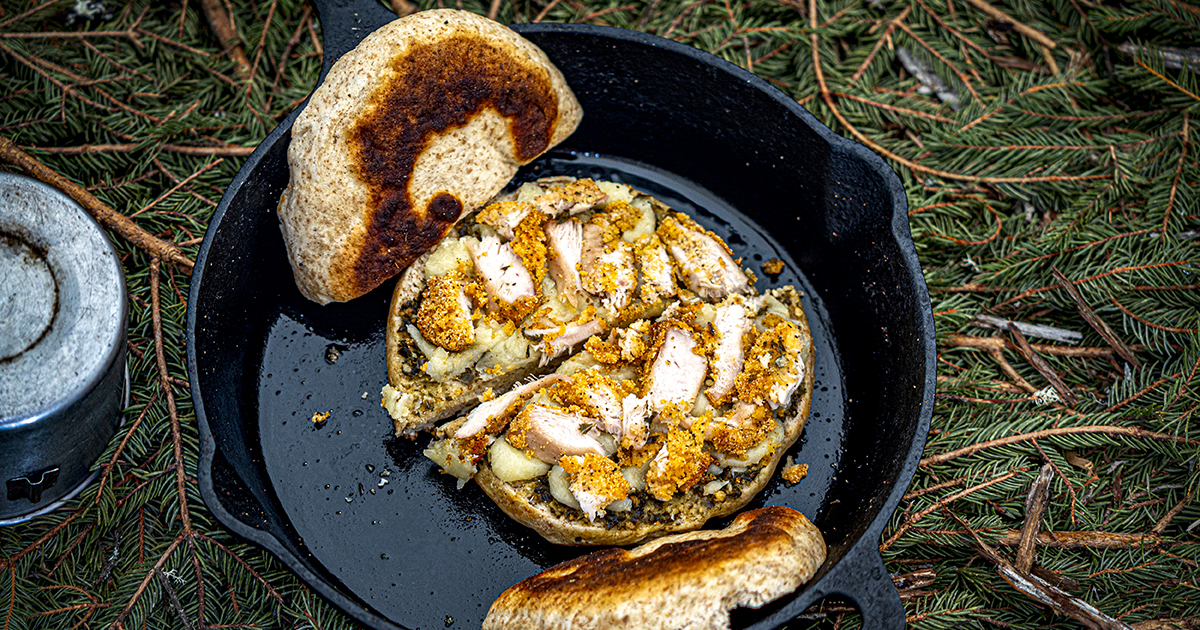

Some anglers have known about this secret cache of sweet, tender meats for a while, but for those of you who haven’t, it’s time to learn where they are and how to cook them. These two delicate pieces of meat are usually the first to go missing from the tray of fried fish at a shore lunch.
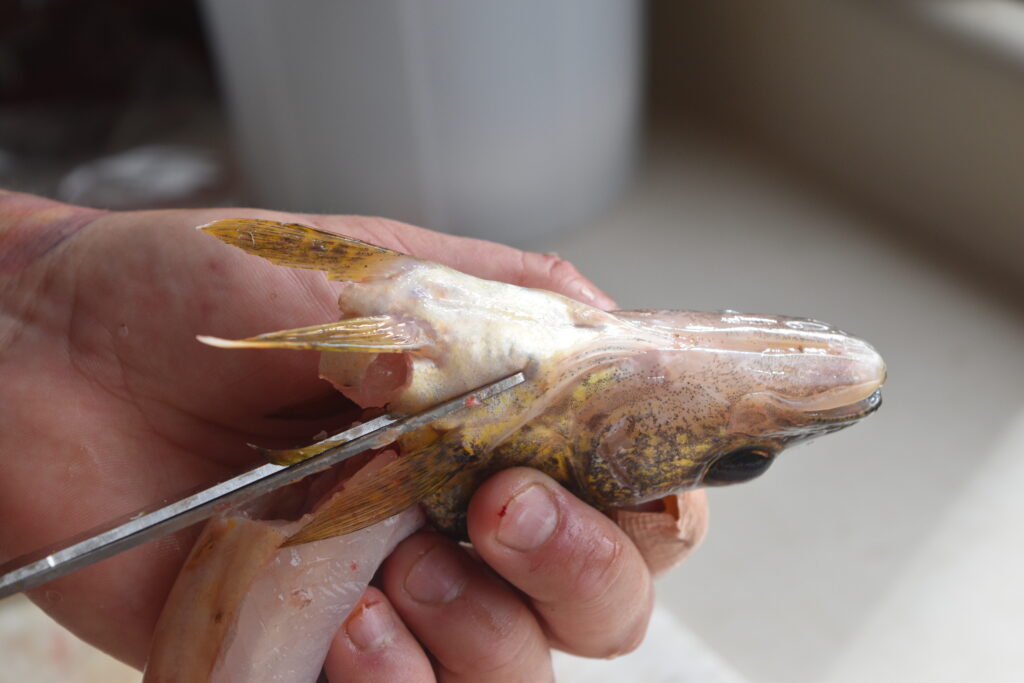
I remove walleye wings with a sharp pair of scissors. Once the main fillets of the fish are removed, make cuts under the pelvic fins as shown, separating the “wing” from the rest of the belly. The final piece of meat will be shaped like a “V.” Keep the pelvic fins attached as “handles” when pulling the meat from the two cartilage pieces, holding the cooked wings in place.
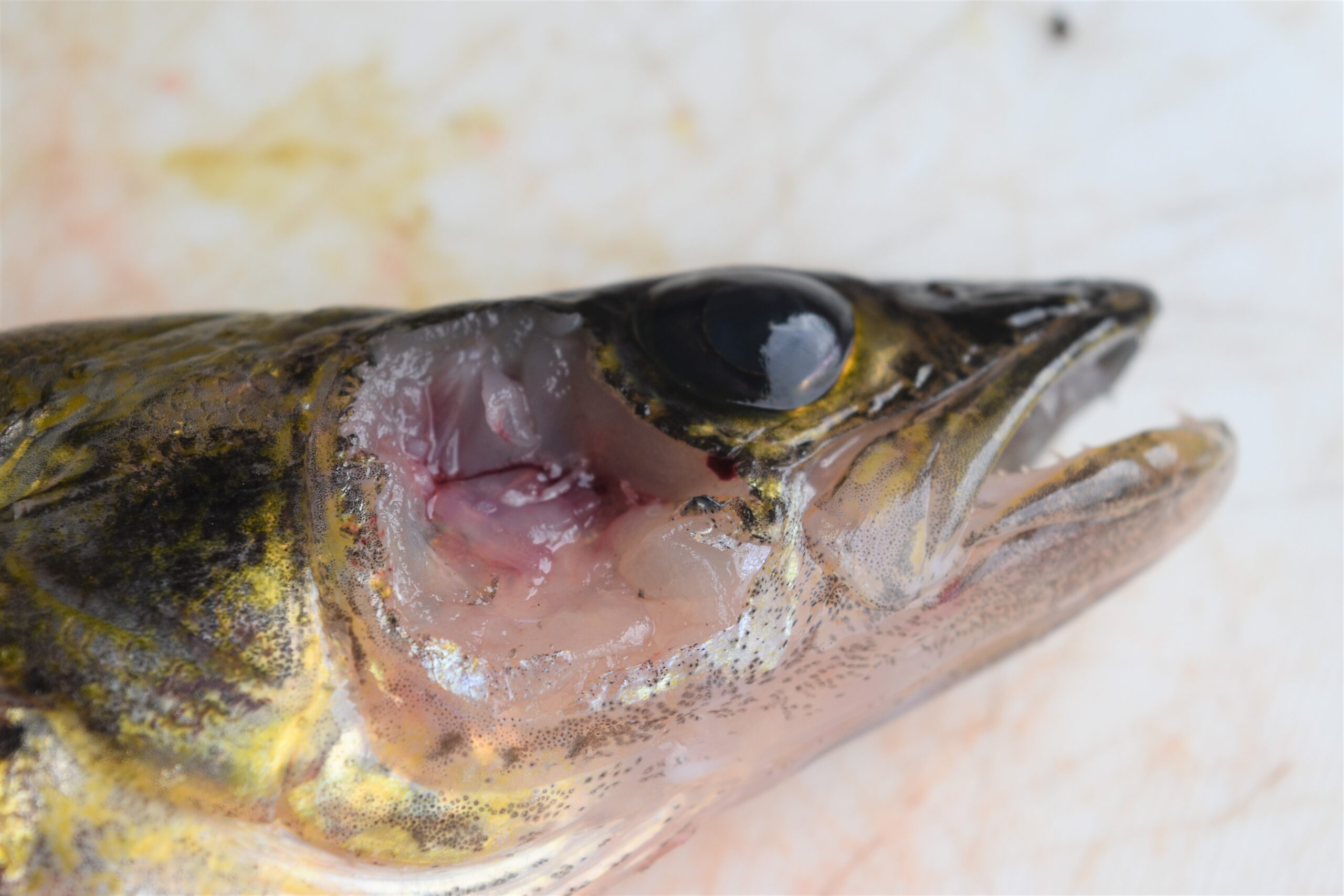
Removing the walleye cheeks is quite simple. Picture the cheek socket as a “bowl,” and insert the tip of your knife just at the edge of the cheek bone, into the meat just behind the eyeball. Slowly work your knife tip up and down, following the edge of the cheek socket in a circle. Once the circle is complete the meat should pop out and the skin should pull right off.
Originally published in the Ontario OUT of DOORS Wild Food digital exclusive