
Our top nine tool picks to make processing your harvest a slice: the must-have gear every hunter should own.
When it’s time to skin out a deer, I use a Camillus HT-7. The full tang, four-inch blade is the perfect size for making small precise cuts around the legs, but long enough to make nice, long slices to peel back the skin on the sides.
Once the animal is quartered and on my butcher block, I use a stiff knife with just a little bit of flex to get around the joints. A straight blade makes removing silver skin and fat a breeze. I use a Clauss six-inch curved and Clauss six-inch straight boning knife, depending on the situation.
I’m old school when it comes to breaking down meat for stew or cubing it for the grinder. I love a scimitar-style butcher knife. Clauss’ butcher-style knife is an awesome, durable knife with an oversized backbone, making it very sturdy. The 10-inch blade makes cutting large moose steaks a breeze.
I love my Cuda six-inch titanium-bonded fillet knife. It comes with a heavy-duty sheath and in my opinion, has one of the best grips when it comes to fillet knives. Its flex is also perfect — not too flexible, but not too stiff.
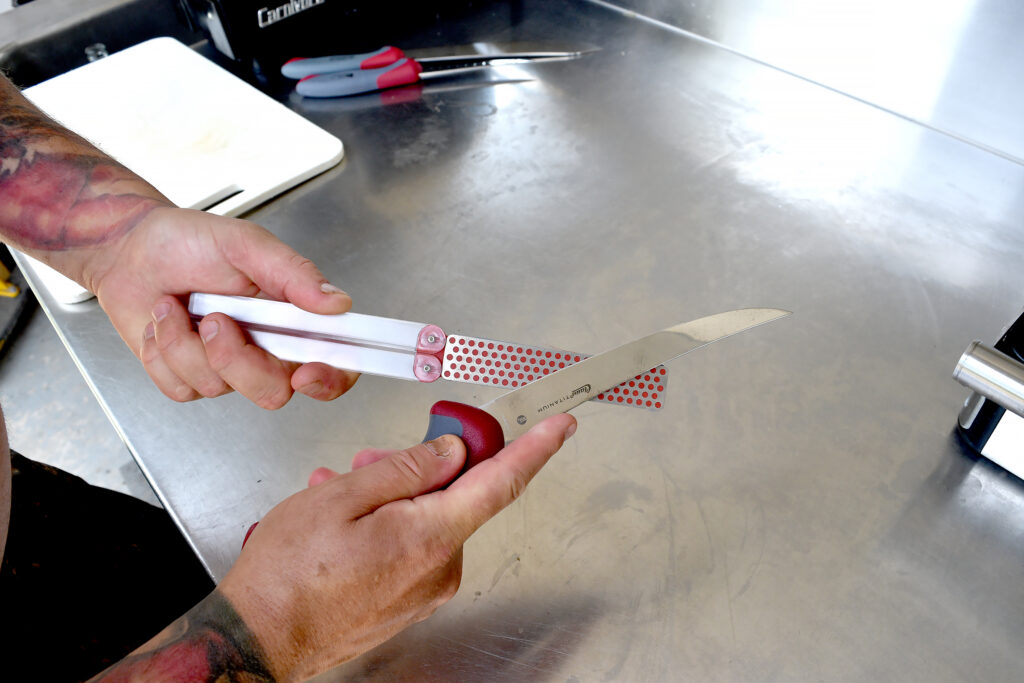
I use a DMT diamond sharpener. Its compact folding style makes it super portable. It also has a coarse and fine side to really help hone your blade to perfection.
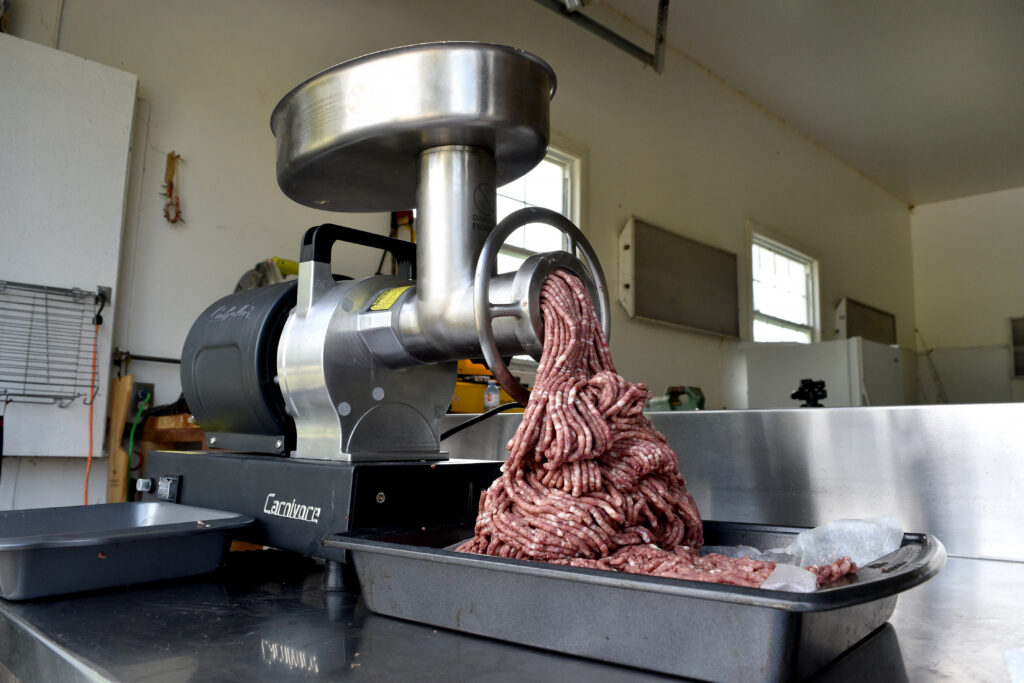
I use a Cabela’s ¾-hp Carnivore grinder to make burgers and to stuff sausage and pepperettes. This reliable unit has great power but is heavy. I have the much lighter Weston #8 grinder and sausage maker as a backup and for easier travel. Both units come with a variety of sausage-stuffing attachments, including larger ones I use for summer sausage, to small skinny ones for pepperettes.
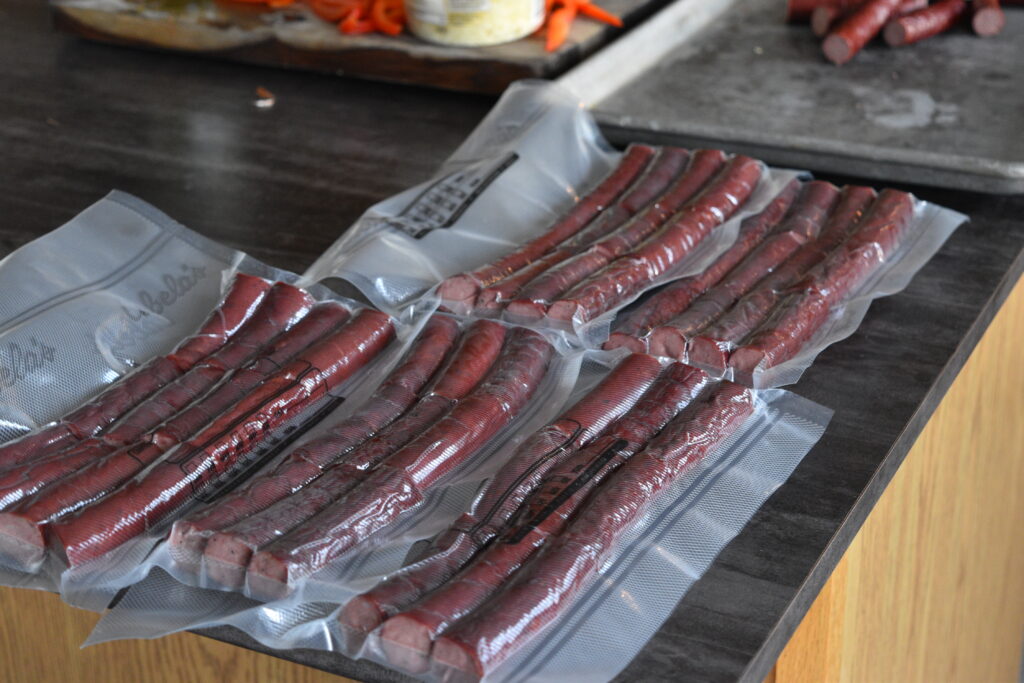
This is another kitchen tool I cannot live without. While butcher paper wrapping protects the meat from freezer burn for a while, nothing beats a vacuum-sealed product. Meat in plastic wrap or butcher
paper can generally last up to six months before a change in flavour and colour, whereas a vacuum-sealed product can hold quality for over two years.
There are many great, affordable food-saver products, as well as commercial-grade vacuum sealers that can cost as much as $5,000. I prefer something in the middle. The Cabela’s commercial 12-inch vacuum sealer is a reliable tool I use weekly in my house. Whether it’s a couple of walleye fillets, some wild ramp pesto, or 100 pounds of venison, this unit gets it done.
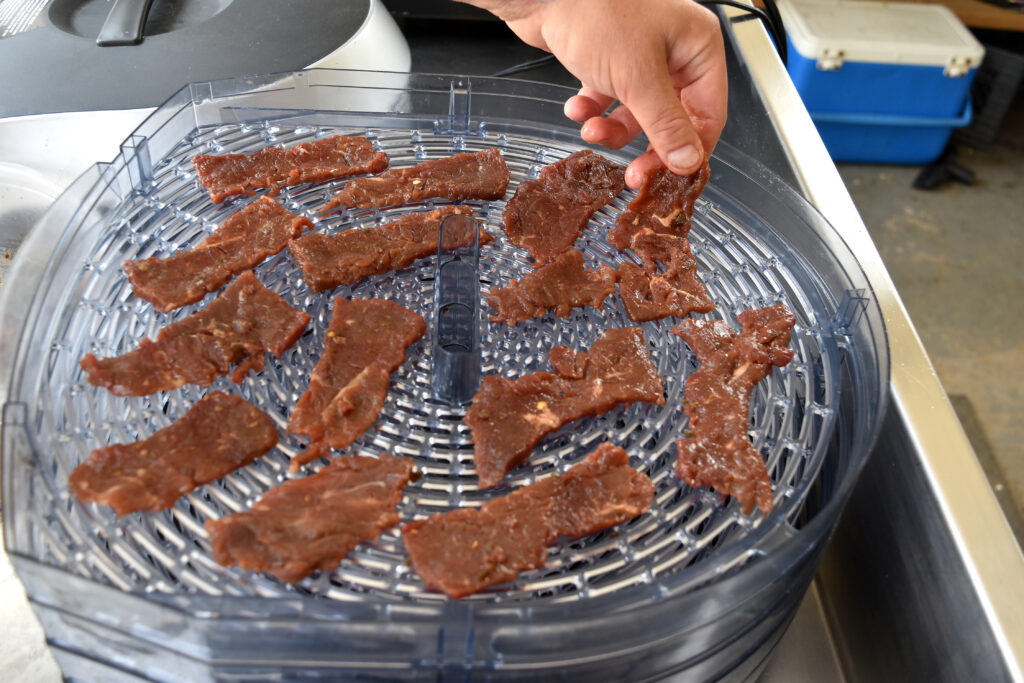
I use a dehydrator for making jerky as I prefer a smokeless flavour (although smoked jerky is also delicious!). I use a Cabela’s six-tray digital dehydrator. It’s easy to use, with touch-button settings for timer and temperature. Just layer your marinated meat and boom, you’ve got jerky in the morning.
I also find dehydrators great for expediting the curing process of turkey spurs and beards, and it’s handy when you have an abundance of chilis or garden herbs you want to dry and save. It also makes great dried fruit snacks.
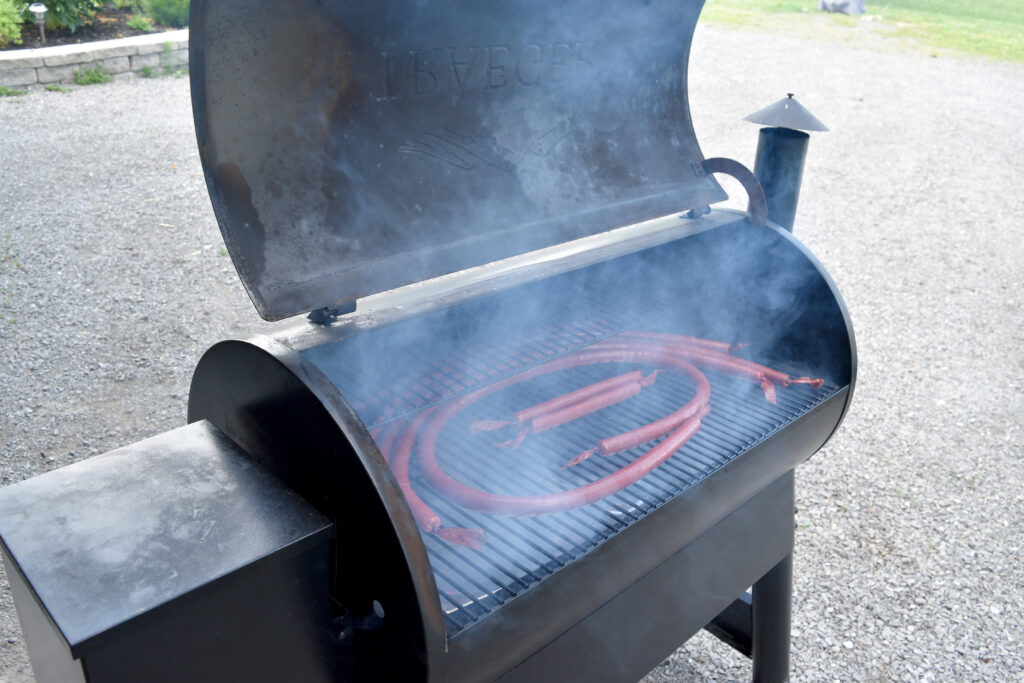
Propane, charcoal, or electric? I’ve used all three and each has its pros and cons. An upright propane smoker is lightweight, has fewer moving parts that can break down, and is handy for hanging long sausage links vertically. Charcoal creates amazing flavour but is a labour of love and needs to be tended frequently.
I now use a Traeger Pro 34 electric pellet smoker. With more than 5,700 square centimetres of grilling space, this smoker allows me to do large batches of pepperettes or sausage on a nice, low, steady temperature. The built-in meat thermometer is crucial when testing your product’s internal temperature. When you’re done smoking, crank up the heat and toss on a nice rack of venison for a great sear and unbeatable flavour.
Originally published in the Ontario OUT of DOORS Wild Food digital exclusive